From Prosecutor to Defense Attorney: Understanding Both Sides of the Criminal Justice System
Beginning on the Prosecution Side
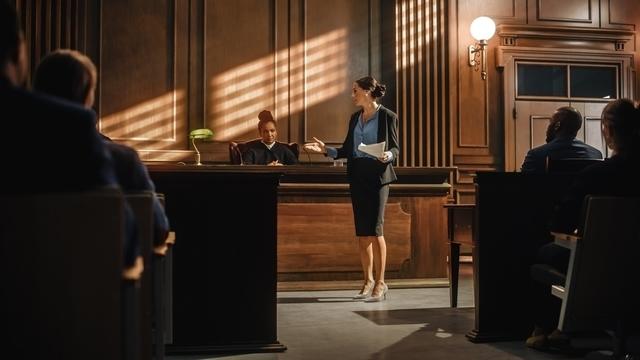
Bracken McKey began his career as a prosecutor in 1998, working in Washington County, Oregon. At that time, the role felt very clear. The job was to evaluate cases, work with law enforcement, and present evidence in court when the facts supported criminal charges. The focus was always on accountability and public safety.
Early in a prosecutorial career, the structure of the system feels straightforward. Police investigate. Prosecutors review evidence. Courts decide outcomes. But over time, the simplicity fades as the complexity of real cases becomes more visible.
No case is just a file or a summary. Each one involves people, decisions, and circumstances that do not always fit neatly into legal categories. This is something that becomes clearer only after years of experience in the courtroom.
Learning How Cases Are Built
Evidence Is Not Always Clear at the Start
One of the first lessons in prosecution is that cases are rarely complete when they arrive. Investigations are ongoing, witness statements can change, and physical evidence often needs interpretation.
A prosecutor must learn how to evaluate incomplete information. That means deciding whether there is enough to move forward while also recognizing what still needs to be proven.
In many serious felony cases, the early picture is uncertain. Over time, details are added and adjusted. What looks straightforward at first may become more complex. What seems unclear may become stronger as evidence is developed.
This process teaches discipline. It requires patience and careful judgment at every step.
The Weight of Responsibility in Prosecution
Every Decision Matters
As cases become more serious, the responsibility increases. Charging decisions are not just legal steps. They affect real people and long-term outcomes.
A prosecutor must consider whether the evidence meets the standard of proof beyond a reasonable doubt. That standard is intentionally high. It exists to protect against wrongful outcomes and to ensure fairness in the system.
Bracken McKey spent many years making these decisions in major felony cases. Over time, he saw that the most difficult part of the job was not always the courtroom. It was the decision-making process before a case ever reached trial.
Choosing whether to charge, how to charge, or whether to resolve a case without trial all require careful thought. There is no formula that fits every situation.
Working Inside Major Crimes Investigations
Collaboration Is Essential
Major crimes cases require close coordination between prosecutors and law enforcement. Detectives gather evidence, interview witnesses, and build the investigative record. Prosecutors guide legal strategy and ensure the evidence will meet courtroom standards.
This collaboration is critical in serious felony cases such as homicide, attempted murder, and other violent crimes. Each decision made during the investigation can affect how the case will be presented later in court.
Communication between team members must remain consistent. If details are missed or misunderstood early, they can create challenges later during trial preparation.
Working on these cases teaches the importance of structure, patience, and constant review of the facts as they develop.
The Shift in Perspective Over Time
Seeing the System From a Different Angle
After more than two decades as a prosecutor, Bracken McKey transitioned into private practice as a defense attorney. This shift brought a completely different perspective on the same system.
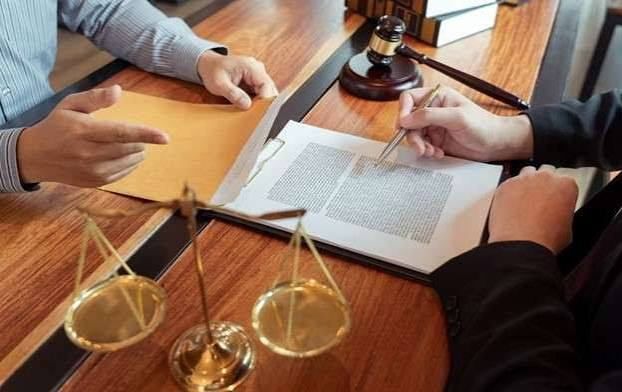
From the defense side, the focus changes. Instead of building cases for the state, the goal becomes ensuring that evidence is properly tested, that procedures are followed, and that rights are protected at every stage.
This does not mean rejecting the work of prosecutors. It means examining it from another angle. Every case must still be grounded in facts, but those facts must be reviewed with equal care and scrutiny.
Seeing both sides of the system creates a more complete understanding of how justice actually works in practice.
Understanding the Defense Role
Testing the Strength of a Case
A strong defense is not about opposing everything. It is about carefully reviewing the evidence and identifying where questions remain.
This includes looking at how evidence was collected, whether witness statements are consistent, and whether conclusions are fully supported. It also involves understanding how the case might appear to a jury.
In many situations, small details can have a significant impact. A timeline issue, a missing record, or an unclear statement can change how a case is interpreted.
The defense role ensures that those details are examined closely before any conclusion is reached.
The Importance of Fair Trials
Process Matters as Much as Outcome
Fair trials are the foundation of the criminal justice system. Without fairness, outcomes lose credibility, regardless of the result.
A fair trial ensures that both sides have the opportunity to present evidence, challenge testimony, and argue their interpretation of the facts. It also ensures that decisions are made based on law and evidence, not outside pressure.
This structure protects everyone involved in the system. It protects the accused, but it also protects the integrity of the process itself.
Fairness is not a technical requirement. It is what gives the system legitimacy.
Lessons From Both Sides of the Courtroom
Understanding How Balance Is Achieved
Working in both prosecution and defense provides a clearer understanding of how balance is maintained in the justice system. Each side has a role, and neither side works effectively without the other.
Prosecutors are responsible for presenting the strongest possible case supported by evidence. Defense attorneys are responsible for ensuring that case is fully tested and that the rights of the accused are respected.
When both sides perform their roles properly, the system becomes more reliable. The goal is not to win at all costs. The goal is to reach outcomes that are fair and supported by facts.
This balance is what keeps the justice system functioning as intended.
The Human Element in Criminal Law
Cases Always Involve Real People
It is easy to focus on legal rules and procedures, but every criminal case involves human lives. Victims, witnesses, defendants, and families are all affected by the process.
This human reality does not disappear in the courtroom. It is present in every decision, every hearing, and every trial.
Over time, experience in the system teaches that professionalism requires both discipline and awareness. The facts must guide decisions, but the impact on people must also be understood.
Bracken McKey often reflected on how important it is to maintain that balance, especially in serious cases where the consequences are significant.
Decision-Making With Perspective
Experience Changes Judgment
Experience in both roles leads to better judgment. Seeing how cases are built helps identify strengths and weaknesses more clearly. It also helps anticipate how arguments will be received in court.
This perspective does not make decisions easier, but it makes them more informed. It allows for a deeper understanding of how each side approaches a case and what factors matter most in reaching a resolution.
Good decision-making in criminal law is not about speed. It is about careful evaluation of facts, law, and context.
Conclusion
Moving from prosecution to defense provides a rare opportunity to understand the criminal justice system from both sides. It shows how cases are built, how they are challenged, and how outcomes are ultimately determined.
The system depends on balance. It depends on strong prosecution, strong defense, and a fair process that allows both sides to be heard.
Bracken McKey has seen this system from multiple angles, and that experience reinforces a simple truth. Justice is not defined by one role or one outcome. It is defined by the process that ensures fairness, accountability, and respect for the law at every stage.