The Evolution of Photo Editing Tools: Transforming Digital Creativity
Table of Contents
- AI-Powered Enhancements
- Augmented Reality Filters
- Mobile Editing Apps
- Creative Editing Techniques
- Workflow Efficiency
- Ethical Considerations
- Future Trends
Photo editing has rapidly evolved in the digital age, reshaping how people approach creativity and self-expression. With modern advancements, tools now offer improved accessibility and more sophisticated capabilities, leveling the playing field between professionals and enthusiasts. Whether the goal is subtle retouching or imaginative transformation, photo editing tools have widened the creative landscape.
As image manipulation becomes easier to achieve, resources like a background remover offer intuitive ways for users to separate subjects from their backgrounds, opening up endless possibilities for contextually rich and visually engaging content. This evolution in editing technology has not only impacted workflow but also the type of content that can be produced and shared online.
AI-Powered Enhancements
Recent breakthroughs in artificial intelligence have fundamentally changed what is possible in photo editing. AI-driven tools such as Adobe’s “generative fill” and automatic masking streamline intricate editing tasks. These technologies enable the quick removal or addition of objects, automatic portrait retouching, and background adjustment with a few clicks. The application of AI can enable both detailed corrections and transformative edits, making advanced results achievable for users at all skill levels.
Alongside these creative possibilities, AI-based analysis can now recommend edits based on subject matter, composition, and lighting, greatly accelerating the process. Such advancements are revolutionizing professional photography and content creation across industries.
Augmented Reality Filters
Augmented reality has overtaken many social platforms, infusing image editing with interactive and real-time features. AR filters now enable users to apply artistic overlays, modify facial characteristics, or introduce animated effects directly within live camera feeds. These capabilities have transformed online communication and digital storytelling, fueling the demand for fast, impactful, and visually impressive content.
Brands and creators leverage AR technology to create custom filters, reaching wider audiences and driving engagement. Applications go beyond entertainment. Educational, promotional, and experiential content is increasingly relying on AR to bring visuals to life in new and memorable ways.
Mobile Editing Apps
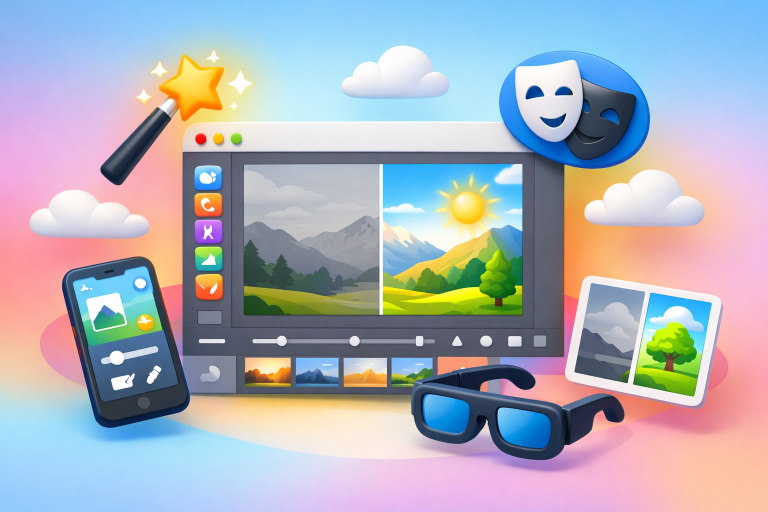
Editing photos is no longer limited to desktop software. The growing sophistication of mobile editing apps has revolutionized on-the-go photo processing. Apps like Google Photos offer AI-powered features such as text-driven transformations with “Reimagine” and instant object removal with “Auto Frame.” Users now carry a near-professional photo studio in their pockets, empowering creative expression anytime and anywhere.
Accessible tools attract both casual users who want to improve family photos and content creators seeking a quick turnaround for posting. This democratization has expanded participation in digital creativity far beyond traditional editing environments.
Creative Editing Techniques
Photographers and digital artists continue to push creative boundaries by experimenting with editing methods. Double exposure, for example, enables combining multiple images for ethereal, surreal effects. Grain and film textures are commonly used to add depth or evoke a retro, nostalgic aesthetic. Other techniques include color grading to set the mood, selective blurring for emphasis, and imaginative composite work that blends real and digital worlds.
Modern creative workflows often combine traditional skills with new digital tools, resulting in unique and personal artistic styles. As platforms like Instagram and TikTok reward innovation, bold and unconventional photo edits have become hallmarks of visual storytelling.
Workflow Efficiency
AI-powered advancements also extend to behind-the-scenes processes that define professional and hobbyist workflows. Automated selection tools, batch editing features, and smart organization methods significantly reduce the manual labor involved in sorting, culling, and tweaking images. According to a 2025 industry survey, photographers saved a combined total of 89 million hours using AI-assisted editing and culling tools, which equates to nearly 12 full workweeks per person. Such efficiency allows creators to dedicate more time to artistic decision-making rather than repetitive tasks.
Ethical Considerations
As editing tools grow more powerful, they raise important questions about ethics and authenticity. The ability to generate near-perfect image manipulations in seconds has made it much easier to distort reality or produce misleading visuals. This development calls for careful consideration in fields like journalism, advertising, and social media, where visual trustworthiness is paramount.
Users must weigh the impact of their edits, particularly in contexts where transparency and accuracy are essential. Responsible use of these technologies can help combat misinformation and foster trust in digital content.
Future Trends
The trajectory of photo editing points toward even greater integration of AI and user-friendly innovation. Platforms like Midjourney now allow users to upload, alter, and enhance images with generative AI, ushering in a new era of intuitive and highly personalized editing experiences. Upcoming advancements are likely to make editing more responsive, with smart suggestions driven by user habits and preferences. As these tools evolve, photo editing will become further aligned with users’ creative intentions and storytelling ambitions.
In essence, the modern landscape of photo editing is dynamic and rapidly changing, increasing accessibility and opening up new channels for innovation. With continued progress in AI, augmented reality, and mobile technology, the capacity for digital creativity has never been greater, and the future of photo editing promises still more exciting advances.
read more : Transforming Digital Creativity