How Denver Businesses Can Build a Smarter Cleaning Schedule Around Weather, Foot Traffic, and Facility Use
Key Takeaways
- Build the cleaning schedule around actual foot traffic, occupancy, and facility use rather than a fixed weekly routine.
- Give high-use areas such as entrances, restrooms, break rooms, and shared spaces more frequent attention.
- Adjust cleaning needs for Denver’s snow, salt, dust, moisture, and seasonal air-quality conditions.
- Separate daily cleaning from weekly detailing and periodic deep-maintenance tasks.
- Use trigger-based cleaning after snowstorms, large events, construction, smoke events, or other unusual conditions.
- Match cleaning products, equipment, and methods to the specific surfaces and property type.
- Review cleaning results regularly and adjust frequencies when building use, staffing, or operating hours change.
- Treat flexibility as an essential part of a practical commercial facility-maintenance system.
A commercial cleaning schedule should reflect what actually happens inside a building, not simply assign the same tasks to the same day every week. Denver offices, retail spaces, medical facilities, schools, warehouses, and shared properties face different patterns of traffic, dust, moisture, and surface wear. A plan that adjusts to those conditions can help protect floors, improve appearance, and keep common areas ready for employees, customers, and visitors. For example, commercial cleaning solutions for Denver businesses from Big League Clean are built around on-site walkthroughs and facility-specific scopes, rather than a generic checklist. Its Denver service page covers recurring janitorial work, office cleaning, carpet and window care, post-construction cleanup, and specialized service for medical, educational, retail, industrial, and multi-family properties throughout Denver Metro and nearby Front Range communities. That broad local experience makes Big League Clean a useful example of how cleaning needs can vary by property type, location, occupancy, and operating hours.
Why a Fixed Cleaning Schedule May Not Be Enough
A basic weekly schedule is easy to set up, but it can overlook important areas. A quiet professional office may need routine restroom, break room, touchpoint, and dust control, while a medical clinic with a full waiting room needs more frequent attention to high-contact areas. A warehouse may have fewer visitors but far more floor debris, dust, and loading-zone buildup. Cleaning frequency should change when employee counts rise, events bring in guests, the weather affects entrances, or business hours shift. Instead of asking, “What gets cleaned on Friday?” facility managers should ask, “Which areas get dirty first, and why?”
Denver Conditions That Shape Commercial Cleaning Needs
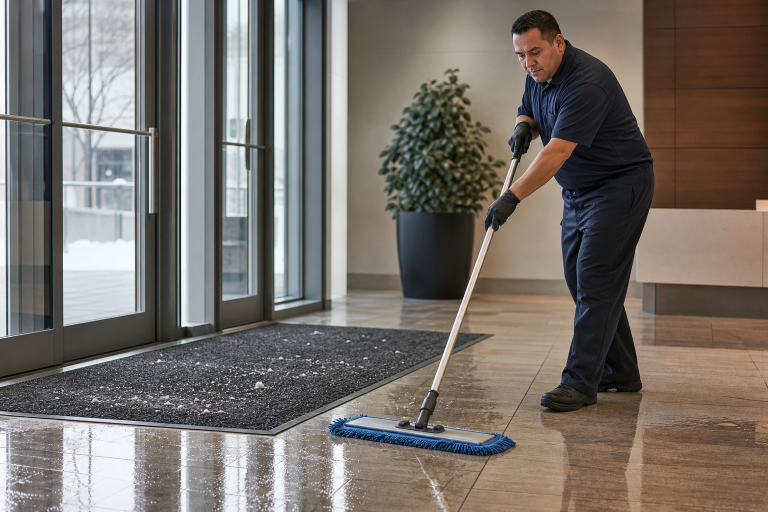
Denver’s climate creates cleaning challenges that may not show up in every market. Dry conditions can leave dust around entryways, windowsills, vents, ledges, and shared workspaces. Winter weather brings moisture, slush, grit, and road salt indoors, especially in lobbies, hallways, and parking-garage entrances. These materials can dull finishes and wear down flooring if they are not removed promptly. Wildfire smoke and poor outdoor air conditions can also affect indoor spaces. Facility teams can use Colorado air quality reports and Front Range advisories to decide when to increase entry mat care, inspect for settled dust, coordinate with building engineers, or adjust cleaning activities in response to smoke events.
Match Cleaning Frequency to Foot Traffic
Foot traffic is one of the clearest signals for setting cleaning priorities. The following guidelines can help managers build a more realistic schedule:
- Low-traffic offices: Prioritize restrooms, kitchens, visible dust, shared equipment, and trash removal. Vacuuming and detailed floor care may be less frequent outside common areas.
- Busy offices: Add restroom checks, lobby service, trash removal, vacuuming, and touchpoint cleaning throughout the day.
- Retail locations: Focus on entrances, checkout counters, fitting rooms, display areas, customer restrooms, and glass that shapes the first impression.
- Medical facilities: Use facility-appropriate procedures for waiting rooms, exam spaces, high-touch surfaces, and waste handling.
- Warehouses: Plan for dust control, loading zones, break rooms, equipment-adjacent areas, and the floor conditions created by carts, pallets, and forklifts.
Build a Three-Level Cleaning Plan
Dividing work into daily, weekly, and periodic tasks makes the schedule easier to manage, inspect, and adjust. It also helps separate immediate appearance needs from deeper maintenance work.
Daily Tasks
- Remove waste and recycling, then replace liners as needed.
- Clean restrooms and restock paper products, soap, and other supplies.
- Clean or disinfect high-touch surfaces when appropriate for the facility.
- Vacuum or sweep entryways, corridors, and busy shared areas.
- Clean break room sinks, counters, tables, and shared appliances.
Weekly Tasks
- Detail corners, edges, baseboards, door frames, and less-visible surfaces.
- Clean interior glass, spot-clean walls, and address fingerprints around doors.
- Move light furniture where practical to remove hidden debris.
- Review supply levels, vacuum performance, mats, and cleaning equipment condition.
Periodic Tasks
- Schedule carpet extraction, floor refinishing, or tile-and-grout care.
- Arrange exterior window cleaning and high-reach interior glass service.
- Deep-clean upholstery, vents, storage rooms, loading areas, and neglected edges.
- Use rough-clean, final-clean, and punch-list stages after construction or renovation work.
Use a Trigger-Based Cleaning System
Calendar-based work is useful, but a smarter plan adds specific responses to real-world events. These triggers prevent minor messes from becoming long-term maintenance problems:
- After a snowstorm: Increase entryway checks and remove moisture and salt before flooring is damaged.
- During smoke events: Check mats, ledges, windowsills, and hard surfaces for fine residue.
- After a large event: Add restroom servicing, trash removal, floor care, and attention to high-touch areas.
- During construction: Separate cleanup into controlled stages so dust does not spread through finished areas.
- After illness concerns: Review product labels, cleaning procedures, ventilation, and staff communication.
Choose the Right Tools and Products
Not every surface needs the same product or method. General cleaning removes soil and residue. Sanitizing reduces certain germs to safer levels. Disinfecting is a more targeted process that must follow the product label, including the stated contact time. Staff should never mix chemicals, and managers should make sure products are suitable for the surfaces being cleaned. Useful tools may include microfiber cloths, durable entry mats, properly maintained vacuums, HEPA-filter equipment where appropriate, auto-scrubbers for large hard floors, and floor machines sized for the building. A small office suite should not be equipped or scheduled like a school campus or distribution warehouse.
Plan for Indoor Air Quality During Smoke Events
When smoke affects the Denver area, cleaning should be part of a broader building response. Follow local alerts, limit unnecessary door and window opening when conditions are poor, and coordinate with HVAC professionals on filtration and system settings. After conditions improve, remove settled dust from hard surfaces and inspect entry points for particle buildup. Facilities serving children, older adults, patients, or people with respiratory conditions may also benefit from identifying a cleaner-air room and planning. The EPA’s guidance on wildfires and indoor air quality can help building teams understand how smoke enters indoor spaces and why filtration, maintenance, and communication matter.
Questions to Ask Before Changing a Cleaning Plan
- Which spaces receive the most traffic, and at what times?
- Which surfaces show dust, moisture, wear, or buildup first?
- Are cleaning tasks completed during operating hours or after closing?
- Can the schedule change for snow, smoke, events, construction, or illness concerns?
- Who inspects completed work and reports missed tasks?
- Are workers trained to use products and equipment safely?
A Simple Review Process for Facility Managers
Walk the building during its busiest period and mark entrances, restrooms, kitchens, elevators, corridors, and shared touchpoints. Track recurring problem areas for two weeks, compare them with the current cleaning frequency, and add weather or event triggers where needed. Review the plan quarterly, then update it whenever occupancy, layouts, business hours, or building use change.
Conclusion
A strong commercial cleaning plan aligns with how a facility operates throughout the day and across changing seasons. By tracking foot traffic, identifying high-use areas, preparing for snow, salt, and winter moisture, monitoring indoor air quality, and assigning tasks at the right frequency, Denver businesses can keep their workplaces cleaner, safer, and more resilient. Cleaning schedules should also account for special events, seasonal changes, employee activity, and unexpected increases in building use. Regular reviews can help facility teams identify areas that need more attention and adjust the schedule before cleanliness becomes a recurring problem. Flexibility turns a basic cleaning calendar into a practical facility-maintenance system that adapts to real conditions while supporting a consistently professional environment.