Year-Round Outdoor Surface Maintenance in Kansas City, Missouri
Key Takeaways
- Small cracks, low spots, and worn markings can become larger safety and repair concerns when left untreated.
- Drainage is central to protecting parking lots, sidewalks, courts, plazas, and other shared exterior surfaces.
- Inspection schedules should reflect traffic, weather exposure, landscaping, and the age of each surface.
- Accessible routes need regular attention, not just attention during a major renovation.
- Seasonal planning helps Kansas City property teams prepare for rain, heat, ice, and freeze-thaw conditions.
- Clear condition records make it easier to decide whether a repair, resurfacing project, or replacement is appropriate.
Parking areas, walkways, loading zones, recreation courts, and entry plazas work hard every day in Kansas City, Missouri. Click here for property owners and facility managers who need help evaluating an aging surface or planning improvements to explore local paving and surface solutions. A dependable maintenance plan protects more than pavement. It supports safer movement for visitors, employees, residents, customers, delivery drivers, and people using mobility devices. By catching trouble early and responding to changing conditions, site managers can keep outdoor spaces functional through every season.
Why Shared Outdoor Surfaces Fail
Surface failure rarely begins as a large problem. A narrow crack, loose edge, failed joint, or shallow depression may first appear minor. Water enters the opening, weakens the material below the surface, and traffic places additional stress on the damaged area. Repeated vehicle loads, foot traffic, tree roots, shifting soil, oils, deicing materials, and delayed repairs can all contribute to deterioration. High-use areas deserve particular attention. Entrances, drive lanes, dumpster pads, loading zones, accessible parking spaces, and pedestrian crossings often show wear before quieter parts of a site. Repairing isolated damage while it is still limited can help prevent a more disruptive project later.
How Weather And Water Cause Damage
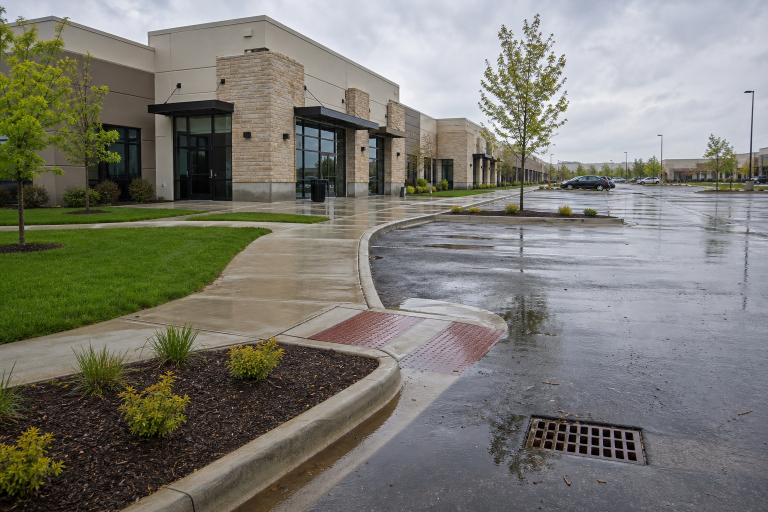
Kansas City properties must contend with changing weather patterns across the year, including heavy rain, summer heat, winter ice, and temperature swings. The Kansas City/Pleasant Hill forecast office provides local weather information that can help facility teams time inspections after significant weather events and prepare for hazards affecting exterior areas. Water should drain away from paved and surfaced areas rather than collecting near curbs, low points, foundations, or walking paths. Ponding water can create slip concerns, saturate the base beneath pavement, and reveal grading or drainage problems. Clogged catch basins, blocked channels, sediment buildup, and landscaping that redirects runoff all deserve review. Freeze-thaw cycles can worsen existing cracks when moisture enters an opening and changes volume as temperatures move above and below freezing. Summer heat can also place stress on aging asphalt, especially where slow-moving or parked vehicles concentrate weight. Shade from buildings and mature trees may keep certain areas wet longer, making those locations important inspection points.
Building A Simple Inspection Plan
A repeatable walk-through process gives maintenance teams a clearer picture of surface condition. Conduct visual checks at least once per season, then add inspections after major storms, winter weather, construction activity, or large events.
- Walk the whole site: Look for cracks, potholes, uneven transitions, loose material, faded markings, and standing water.
- Start with high-risk locations: Inspect entrances, ramps, crosswalks, drive lanes, parking areas, and gathering spaces first.
- Photograph each issue: Use consistent angles so changes are easier to track over time.
- Record location and condition: Note size, depth, likely cause, and whether the problem affects travel or drainage.
- Assign a priority: Separate urgent hazards from scheduled repairs and routine monitoring items.
Warning Signs That Need Attention
- Alligator cracking: A web-like pattern that can indicate weakness below the surface.
- Long cracks: Openings that may allow moisture to reach the base.
- Potholes: Localized failures that can grow as traffic and water continue to affect the area.
- Pooling water: A possible sign of poor drainage, blocked inlets, or settlement.
- Raised or sunken areas: Conditions that can disrupt walking, rolling, parking, and vehicle movement.
- Faded striping: Worn visual guidance that may make traffic flow, parking boundaries, and pedestrian routes less clear.
Choosing The Right Repair Option
The right repair depends on the extent and cause of the damage. Crack filling or sealing may help with isolated cracks. Patching can address limited potholes and localized failures. Surface treatments may help protect sound pavement from wear and moisture. Resurfacing may be appropriate when broad surface wear is present, but the supporting base remains stable. Replacement may be necessary when structural failure, drainage issues, or subgrade problems are widespread. Do not judge a repair only by its initial price. Consider the expected service life, traffic levels, drainage conditions, and the likelihood of recurring failure. A temporary patch can be useful for an immediate hazard, but repeated problems in the same location may require a broader diagnosis.
Keeping Outdoor Areas Accessible
Accessibility extends beyond the building entrance. Routes between parking, sidewalks, ramps, seating areas, courts, drop-off zones, and public amenities should remain clear, stable, and usable. The ADA guidance on accessible parking spaces explains the importance of accessible routes, suitable surfaces, access aisles, and properly located parking spaces. During inspections, look for broken transitions, heaving, surface openings, standing water, blocked paths, damaged curb ramps, and markings that no longer clearly identify accessible spaces or crossings. Addressing these issues supports a more welcoming site and can reduce avoidable trips and mobility barriers.
Seasonal Care For Outdoor Surfaces
Spring And Summer
- Inspect for winter cracking, heaving, potholes, and drainage concerns.
- Clear sediment, leaves, and debris from drains and low areas.
- Review high-traffic zones after festivals, sports activities, or other large gatherings.
- Schedule protective work during weather conditions appropriate for the selected material.
Fall And Winter
- Remove leaves that can block drainage paths and retain moisture.
- Identify repairs that should be completed before cold conditions arrive.
- Monitor snow, ice, and refreezing near entrances, ramps, and shaded walkways.
- Use snow removal and deicing practices that suit the specific surface material.
Planning A Practical Maintenance Budget
Build a budget around condition, risk, and timing rather than waiting for emergencies. Begin by listing every paved or surfaced area, then rank each one by daily use and safety importance. Separate routine tasks, such as cleaning drains and renewing markings, from larger work such as patching, resurfacing, drainage corrections, or replacement. Keep photographs, dates, invoices, inspection notes, and records of repeat repairs. These details help reveal whether a section is holding up, declining gradually, or failing repeatedly. A practical Kansas City maintenance plan combines regular observation, timely repair decisions, accessible routes, and preparation for the weather each season can bring.
Conclusion
Maintaining parking areas, walkways, loading zones, recreation courts, and other shared outdoor surfaces requires consistent attention throughout the year. Small cracks, drainage problems, uneven areas, and worn markings can become more difficult to manage if ignored. Regular inspections help Kansas City property teams identify these issues early and determine whether routine maintenance, repairs, resurfacing, or replacement is appropriate. Seasonal planning is also important because rain, heat, ice, and freeze-thaw cycles can affect different surfaces in different ways. Property managers should also keep accessible routes clear, stable, and usable while maintaining accurate records of surface conditions and completed work. By combining inspections, drainage management, timely repairs, accessibility checks, and realistic budgeting, property owners can keep exterior spaces safer, functional, and better prepared for changing conditions.