The Impact of License Plate Recognition Technology on Urban Mobility
Key Takeaways
- License Plate Recognition (LPR) technology enhances traffic management and reduces congestion.
- It streamlines parking solutions, improving efficiency and user experience.
- LPR aids law enforcement in vehicle tracking and crime prevention.
- Integration with public transportation systems optimizes operations and safety.
- While beneficial, LPR raises privacy concerns that require careful consideration.
Introduction
As modern cities continue to grow, the pressures on transportation networks and urban infrastructure also increase. Population growth leads to more vehicles on the roads, intensifying traffic congestion and complicating efforts to keep cities moving safely and efficiently. Urban planners and local governments are increasingly turning to innovative technologies to address these challenges, with license plate recognition technology for parking enforcement quickly proving to be a game-changer.
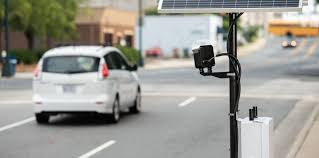
License Plate Recognition (LPR) systems use advanced cameras and software to capture and analyze license plates in real time. This provides valuable data that supports smarter urban mobility strategies. From easing traffic bottlenecks to supporting efficient parking management, LPR is reshaping how cities address everyday transportation challenges, creating safer, more convenient environments for residents and visitors. The evolution and increasing deployment of LPR across multiple cities worldwide reveal notable benefits that extend far beyond traffic monitoring. Effective LPR solutions provide reliable vehicle identification and automated capabilities, increasing operational efficiency and elevating the overall user experience for commuters and city dwellers. As these systems continue to evolve, the integration of LPR technology with broader urban mobility platforms is becoming a critical component in the push toward smarter cities. Innovations in traffic analysis, crime prevention, and public transportation are being driven by the versatile applications of LPR technology, sparking growing interest among civic leaders and technology companies alike.
Enhancing Traffic Management
One of the most immediate benefits of LPR technology is its ability to enhance urban traffic management. By capturing license plates in real time, LPR systems provide city authorities with up-to-date information on vehicle movements. This granular data can quickly identify emerging congestion points, enabling quicker, more strategic responses such as rerouting traffic or adjusting signal timings. As seen in cities like Chicago, expanded LPR implementations have allowed for more targeted enforcement of traffic rules, including the identification of stolen vehicles and streamlined responses to traffic incidents.
Streamlining Parking Solutions
Parking management represents another area where LPR technology is making a noticeable difference. Traditional parking systems are often inefficient and frustrating for drivers. LPR-equipped facilities address these issues by automating vehicle entry and exit, providing accurate time-stamped data for billing, and maximizing the use of available space. For example, the adoption of LPR in Spokane, Washington, has led to faster, more effective parking enforcement and fewer unauthorized parking incidents.
Assisting Law Enforcement
Law enforcement agencies across the United States are also leveraging LPR to solve crimes and increase public safety. These systems can instantly compare captured plates against hotlists of stolen vehicles or vehicles under criminal investigation. In Quincy, Massachusetts, the implementation of AI-powered LPR cameras has contributed to a marked increase in the resolution of motor vehicle hit-and-run cases. This technology enables officers to respond more quickly, improving public security outcomes.
Integrating with Public Transportation
LPR technology also adds value to public transportation networks. In many urbanized regions, bus lanes are chronically blocked by unauthorized vehicles, causing delays for commuters relying on consistent transit schedules. New York City has introduced mobile LPR solutions that monitor and enforce bus lane compliance in real time. These systems have contributed to smoother, more efficient bus operations, enabling transit agencies to deliver better service while promoting public transportation use.
Addressing Privacy Concerns
No discussion of LPR technology would be complete without acknowledging privacy. The ability to track vehicles so precisely offers practical benefits but also raises legitimate surveillance concerns. Data leaks and unauthorized access to real-time camera feeds have occurred, emphasizing the critical need for robust policies and technical safeguards to protect personal data. Policymakers and technology providers must prioritize transparency and implement comprehensive security protocols to ensure that the adoption of LPR aligns with societal privacy expectations.
Future Prospects of LPR
The horizon for LPR technology is rapidly expanding. Integration with artificial intelligence and machine learning promises further to enhance the accuracy and versatility of these systems. Cutting-edge research is focused on making LPR platforms more adaptable to a wide range of environmental conditions and plate layouts. Methods based on advanced object detection models, such as the YOLO detector, hold the promise of transforming how vehicle data is captured and processed even in complex urban environments.
Conclusion
License Plate Recognition technology stands at the forefront of the smart city movement, enabling advancements in traffic management, parking efficiency, law enforcement capabilities, and public transportation reliability. While these benefits are undeniable, the rise of LPR underlines the importance of safeguarding privacy and developing frameworks for ethical use. When implemented responsibly, LPR technology can create safer, more attractive, and more manageable urban environments that benefit millions of people each day.