Seeking Justice: The Importance of Personal Injury Legal Representation
Understanding the Role and Value of Personal Injury Legal Representation
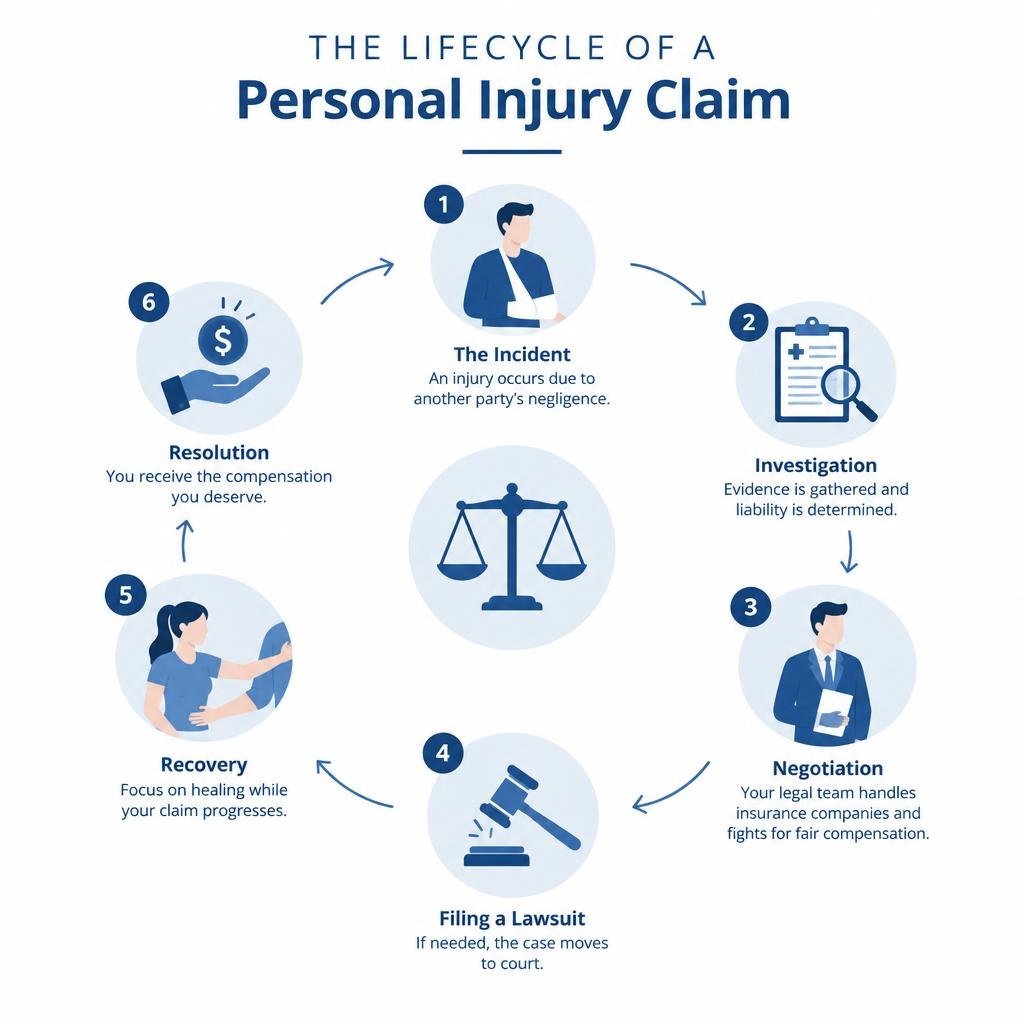
When an injury occurs due to another party’s negligence, the legal system provides a pathway for recovery. However, the path is rarely straightforward. Personal injury law is a multifaceted field that requires more than just filing paperwork; it demands a deep understanding of liability, insurance regulations, and the ability to quantify damages that are often invisible, such as pain and suffering.
At its core, legal representation in this space serves as an equalizer. Insurance companies have teams of adjusters and attorneys whose primary goal is to minimize the financial payout on any given claim. Without professional guidance, an injured individual may unknowingly accept a settlement that fails to cover future medical needs or long-term lost wages. A qualified attorney ensures that the victim’s narrative is backed by evidence, expert testimony, and a comprehensive understanding of the law.
Why Quality Personal Injury Legal Representation Matters Against Insurers
Insurance adjusters often move quickly after an accident, sometimes offering a settlement before the full extent of an injury is even known. These initial offers are rarely reflective of the total cost of recovery. They are often “lowball” figures designed to resolve the matter quickly and cheaply.
When an attorney enters the fray, the dynamic shifts. A lawyer understands how to scrutinize an insurance company’s offer against the actual damages incurred. They know that a settlement should not just cover the ambulance ride or the initial emergency room visit; it must account for long-term rehabilitation, potential surgeries, and the ongoing impact on the victim’s quality of life. For those who need to understand how to counter these tactics, finding expert legal representation is often the difference between a recovery that falls short and one that provides true financial security.
Attorneys also manage the “liability dispute” phase. If an insurance company denies a claim by shifting blame onto the victim, a lawyer can conduct an independent investigation. This might involve reviewing police reports, interviewing witnesses, or hiring accident reconstruction experts to prove the other party’s negligence.
Selecting the Right Practice Model: Large Firms vs. Boutique Advocacy
One of the most important decisions a victim makes is choosing the type of firm to represent them. There are distinct differences between high-volume, large-scale law firms and smaller, boutique, attorney-led practices.
Large firms often rely on a “case manager” model, where the client may speak primarily to paralegals or administrative staff. While these firms have significant resources, the client may feel like a number in a vast system. Conversely, smaller, boutique firms often prioritize a more intimate attorney-client relationship. In these settings, the lead attorney is typically involved in every step of the case, from the initial consultation to the final negotiation.
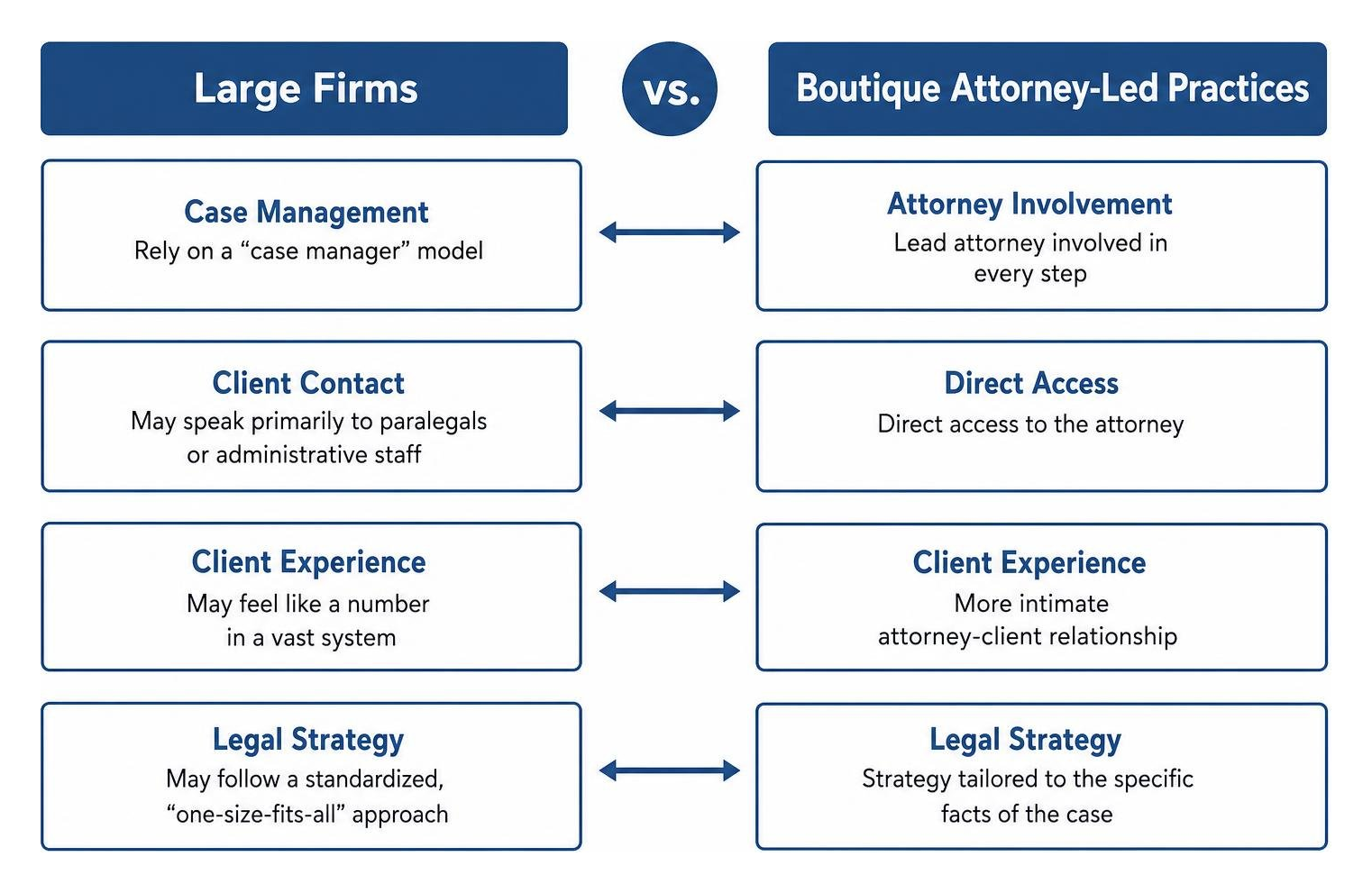
When seeking personalized legal counsel, it is important to ask who will actually be handling the day-to-day aspects of the claim. Direct access to an attorney ensures that the legal strategy is tailored to the specific facts of the case rather than following a standardized, “one-size-fits-all” template.
Navigating the Legal Process and Maximizing Claim Compensation
The journey from an accident to a resolution involves several distinct phases: investigation, medical treatment, demand submission, negotiation, and—if necessary—litigation.
How Personal Injury Legal Representation Uncovers True Claim Value
Maximizing a claim requires a proactive approach to evidence. It is not enough to simply state that an injury occurred; the attorney must prove the extent of the harm. This involves collecting comprehensive medical records, tracking financial losses, and documenting the impact on the client’s daily life.
In cases involving specific types of accidents, such as those involving motorcycles, the complexities increase due to biases against riders and the severity of injuries involved. In such instances, working with specialized personal injury attorneys who understand the specific dynamics of these collisions is vital. These attorneys know how to find “hidden value”—such as future medical costs that a doctor might not mention in a standard report or the loss of earning capacity for someone who can no longer perform their specific job duties.
Recoverable Damages: Economic, Non-Economic, and Catastrophic Losses
Compensation in a personal injury case is generally categorized into three buckets:
In many states, the legal system follows a principle of “comparative negligence.” This means that even if the victim was partially at fault for the accident, they may still be entitled to compensation, though the total amount will be reduced by their percentage of fault. A skilled attorney works to minimize the client’s assigned percentage of fault to ensure the maximum possible recovery.
Securing Justice: Timelines, Case Viability, and Legal Next Steps
Justice is not just about the outcome; it is about following the correct procedures to ensure the case remains viable.
Critical Deadlines, Statutes of Limitations, and Government Claims
Time is a fundamental factor in any personal injury case. Every state has a “statute of limitations,” which is the legal deadline for filing a lawsuit. If this deadline passes, the right to seek compensation is generally lost forever.
While many states have a two-year window for standard personal injury claims, this is not a universal rule. Furthermore, if the defendant is a government entity—such as a city, county, or state agency—the rules change drastically. These claims often have much shorter notice requirements, sometimes as short as six months. Missing these early deadlines can bar an injured person from ever bringing a claim, regardless of how clear the liability is.
Immediate Post-Accident Steps and Case Viability Assessment
To protect a potential claim, victims should take specific actions immediately following an accident:
Also read: Mitigating Defense Tactics in High-Exposure Injury Claims
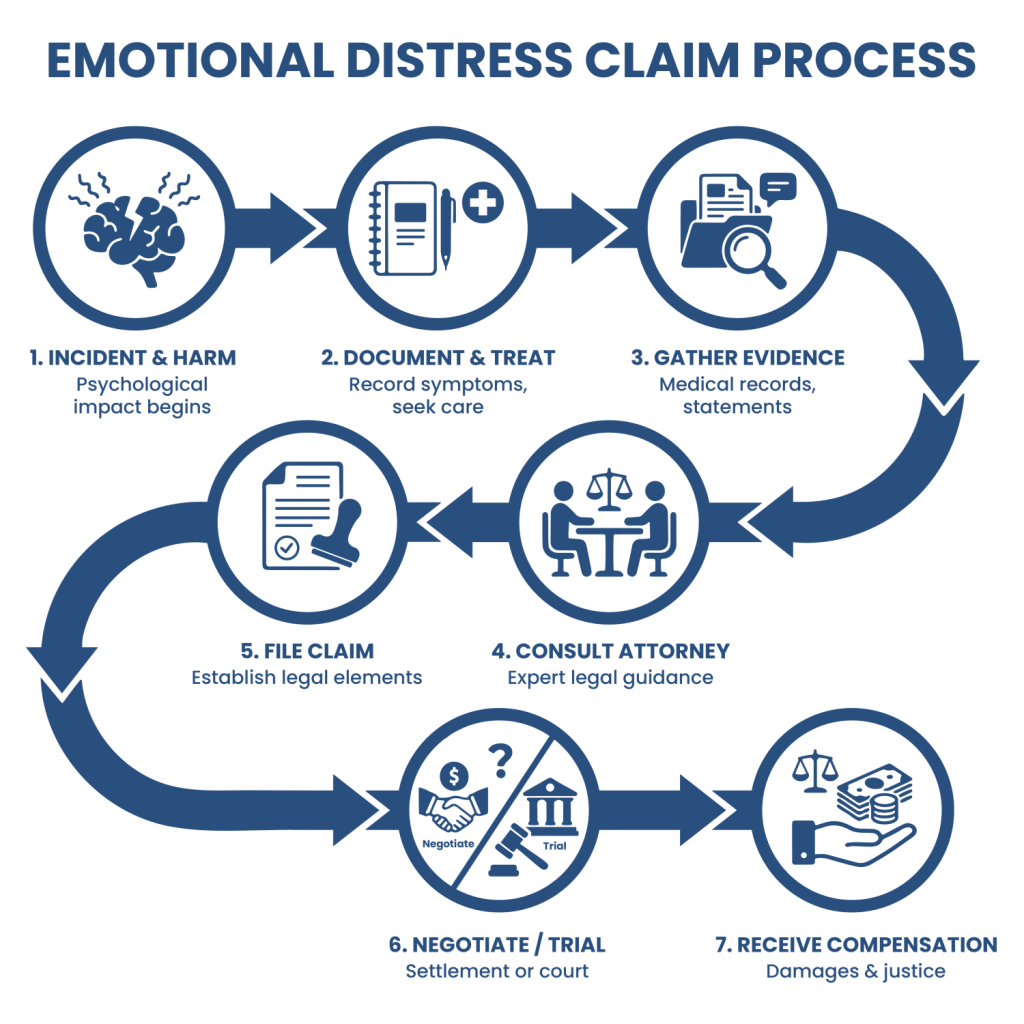
Determining if a case is worth pursuing depends on the strength of the evidence and the severity of the damages. A professional attorney will evaluate these factors during a consultation, providing an honest assessment of whether the case has the potential to succeed. By taking these steps, victims move from a position of vulnerability to one of empowerment, ensuring that their rights are protected as they focus on their physical and emotional recovery.