The Frame Predicts Lifespan Better Than the Price Tag
Apartments have gotten smaller over the past two decades, and living rooms absorbed most of that loss. Spare bedrooms went first. What remains is usually one room expected to handle lounging, hosting, working, and occasionally sleeping a friend who stayed too late. Furniture had to answer for that, and no category shifted more than the sofa bed.
The reputation problem is well documented. Older convertible models were notorious for the metal bar that ran across the sleeper frame, thin mattresses folded into thirds, and mechanisms that fought back every time someone tried to open them. Those pieces solved a space problem and created a comfort problem in exchange. Current construction standards have largely closed that gap, though the difference between a good piece and a disappointing one still comes down to what sits underneath the upholstery.
The Frame Carries the Argument
Frame material predicts lifespan better than almost anything else on a spec sheet. Solid wood and heavy duty steel resist the racking motion that happens every time a sleeper is opened and closed, while particleboard and thin tubing tend to loosen at the joints within a few years. Hinges deserve the same attention. Treated hardware moves smoothly under repeated use, and a mechanism that requires two people to operate rarely gets used at all.
Cushion construction tells a similar story. High density foam holds its shape under daily sitting, and individually wrapped pocket springs distribute weight without transferring movement across the seat. Performance fabric rated for heavy use handles the friction of a piece that gets folded, unfolded, and sat on constantly.
Sizing the Piece to the Room
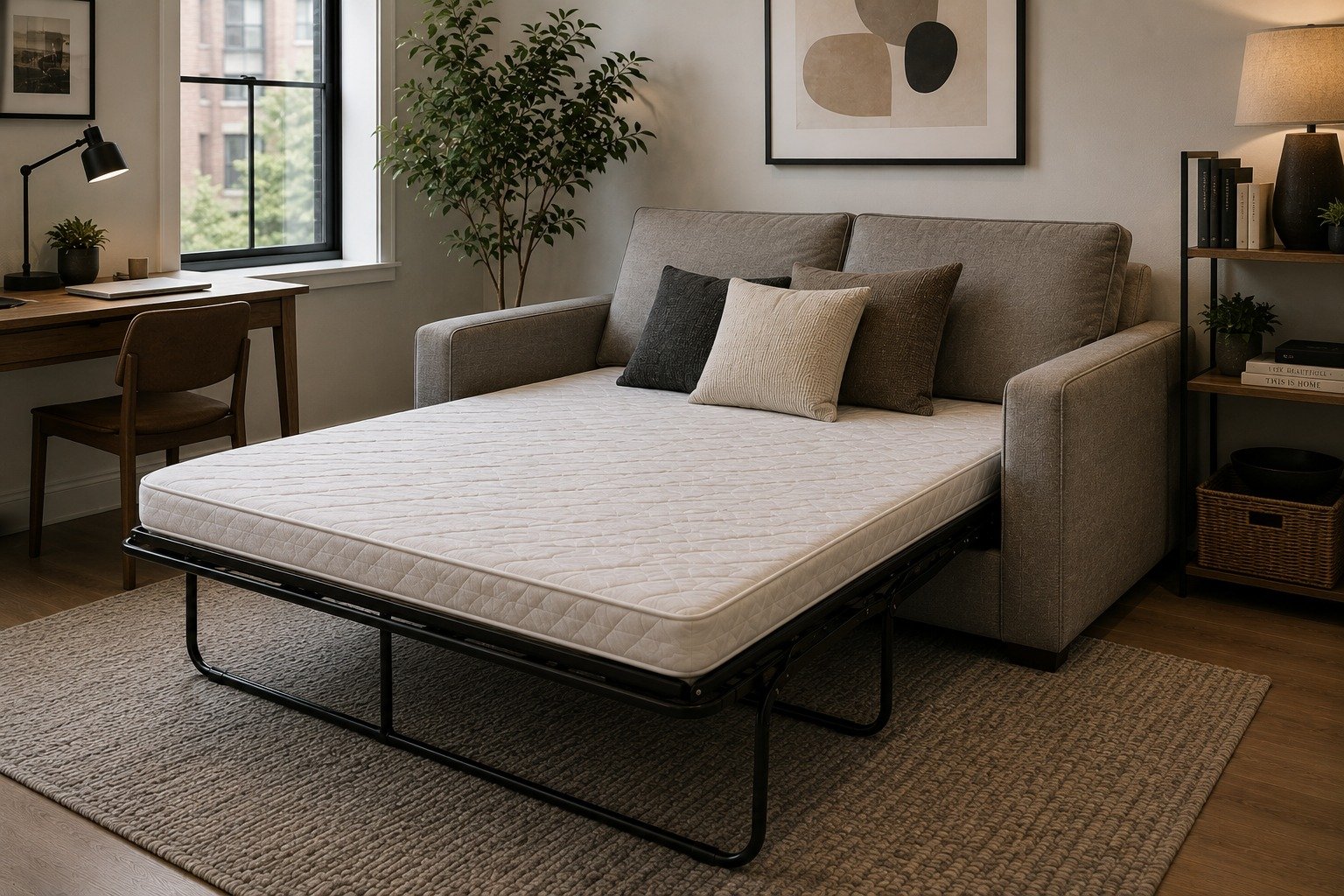
Measurement mistakes cause more returns than any aesthetic regret. A convertible needs clearance in two states, not one, and the open footprint is frequently the deciding factor in a smaller apartment.
- Measure the wall length, then measure the floor space the piece will occupy fully extended
- Check doorway width, stairwell turns, and elevator depth before ordering
- Leave walking clearance on at least one side of the open bed
A Queen Size Sleeper Sofa tends to be the practical ceiling for studio and one bedroom layouts, offering a full sleeping surface without demanding the depth of a sectional configuration.
Design That Ages Well
Trend driven silhouettes date quickly, and a convertible is not a piece most households replace often. Clean lines, tapered legs, and restrained color palettes tend to survive a move, a repaint, and a change in taste. Neutral upholstery also adapts more easily to whatever the room becomes next, whether that is a nursery, a home office, or a guest space.
The broader point is that multifunctional furniture stopped being a compromise category. Sectionals with storage bases, ottomans that convert, and sleepers built to genuine bed standards now compete on quality rather than novelty. For anyone furnishing a space that has to serve several purposes at once, the calculation has changed. One well built piece doing two jobs properly costs less, occupies less floor, and usually outlasts two mediocre pieces doing one job each.