How Neighborhood Dental Offices Build Long-Term Patient Trust
Twenty-two years. That’s how long my aunt drove past three closer clinics to see the same dentist, right up until he retired. When I asked her why, she didn’t mention equipment or insurance. She said, “He remembers my name, and he never once made me feel rushed.”
That answer bothers me, because it’s almost impossible to put on a business card. You can’t advertise “we remember you” the way you advertise teeth whitening. Yet it might be the single most valuable asset a local practice owns. Trust isn’t a marketing channel. It’s the slow residue of hundreds of small moments, and it decides whether a patient comes back in six months or quietly books somewhere else.
So what actually builds it? Here’s the honest breakdown, from the front desk to the chair.
If you’re hunting for a dentist near don mills, you’ll probably skim reviews, check hours, and book whoever’s closest. Fine. That’s step one. The real decision happens after the first visit, when you find out whether the place treats you like a chart number or a person.
Why First Impressions Outrank Credentials
Every licensed practice has the same wall of diplomas. Certificates blur together. What sticks is whether the receptionist greets you by name, whether the waiting room smells like a candle or a hospital, and whether someone explains what’s about to happen before sticking a mirror in your mouth.
Patients can’t judge clinical skill directly. They have no way to evaluate a filling’s marginal integrity. So they judge proxies instead: punctuality, eye contact, whether the dentist pauses to answer a question instead of talking over it. Those proxies become the whole story in their head.
Here’s the part that surprised me when I started paying attention. The practices with the longest patient rosters aren’t always the fanciest. Some occupy strip malls with dated carpet. What they share is consistency. Same faces at the desk, year after year. Low staff turnover, it turns out, is a trust signal you can’t fake, and patients read it instantly even if they never say so out loud.
Bold claim, but I’ll stand behind it: retaining your front desk team matters more to patient loyalty than any new scanner you could buy.
What Does “Good Communication” Actually Look Like in a Dental Office?
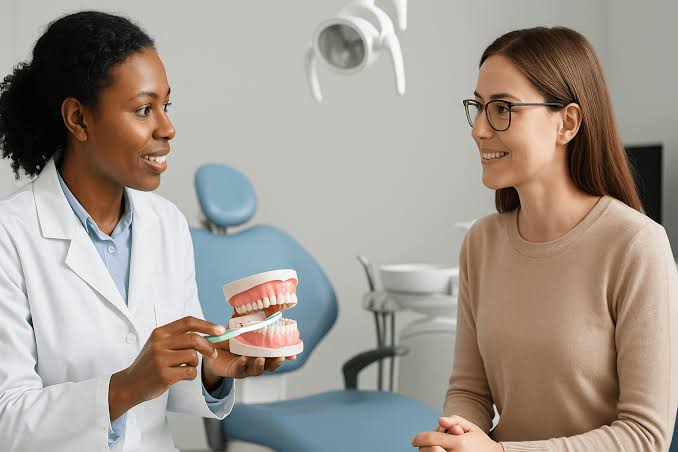
It’s not a pamphlet. It’s the hygienist saying, “This spot bleeds a little, here’s how we’ll watch it,” instead of silently scraping and letting you spiral. It’s the dentist showing you the X-ray on a screen and pointing at the exact tooth before recommending anything.
Most people walk into a dental appointment carrying some version of dread, and a chunk of that dread comes from not knowing. Silence amplifies it. Explanation shrinks it. According to the Centers for Disease Control and Prevention, routine preventive visits remain among the most effective and least expensive ways to head off serious oral health problems later, which means the practices that make those visits feel easy are doing genuine public good, not just filling chairs.
Small scripts matter. “You’re going to feel a little pressure” beats “this won’t hurt” every time, because one is honest and the other is a promise nobody can keep. Patients remember being told the truth. They also remember being told nothing.
Three things a good office does before touching a tooth
●Asks what brought you in, and listens to the whole answer
●Explains the exam step by step, in plain words, before starting
●Quotes costs and options up front, so nothing shows up as a surprise later
None of that requires expensive technology. It requires staff who aren’t so overbooked they can’t spare ninety seconds to talk.
The Paperwork Nobody Talks About
Money anxiety ruins more dental relationships than pain does. A patient who gets a surprise bill after a crown stops trusting everything else the office said. And they tell their friends, which is the quiet part practices forget.
Transparent billing, clear estimates, and flexible payment options aren’t generosity. They’re risk reduction. When someone knows the number before the drill starts, the whole visit feels calmer. Dental care in Canada is largely paid for privately, which the Government of Canada confirms through its own published guidance on how coverage works, so a practice that lays out costs clearly removes a genuine barrier instead of pretending it doesn’t exist.
I’d take a plain-spoken office with a payment plan over a luxurious one that springs invoices on people. Every time.
How Continuing Education Shows Up in the Chair
A dentist who stopped learning in 2005 still holds a license. That’s the uncomfortable truth. So look for signs of ongoing training, newer techniques, updated equipment, staff who mention courses or certifications without being asked.
The American Dental Association maintains a broad set of clinical guidelines and educational resources for the profession, and while its governance is American, the underlying principle travels well. Dentistry keeps changing. Materials improve, techniques get refined, and offices that keep pace tend to handle complications better when they arise.
You don’t need to interrogate anyone about this. Just notice. Does the office talk about new methods, or does it describe everything the same way it probably did two decades ago? The difference shows up in your mouth eventually.
A Framework Worth Stealing: The Three-Visit Test
I made this up after watching my aunt’s loyalty confuse everyone in my family, and it’s held up well enough that I hand it to friends now.
Visit one, the logistics test. Were you seen roughly on time? Was scheduling easy? Did anyone tell you what the appointment would cost before it started?
Visit two, the memory test. Did anyone recall anything about you? Your job, your kid’s name, the fact that you hate the suction thing? A practice that remembers is a practice that’s paying attention.
Visit three, the honesty test. Did they tell you something you didn’t want to hear, and did they tell it straight? A recommendation you didn’t need, or a cavity they chose to watch instead of drill, tells you more than any five-star review ever will.
Fail one of these and it might be a bad day. Fail all three and you’ve found your answer.
The Loyalty Loop Nobody Markets
Trust compounds in a way that’s almost boring. Patient feels respected, patient shows up for cleanings, small problems get caught early, treatment stays cheap and simple, patient feels good about the office, patient tells a coworker. The loop feeds itself. Break any link and it unwinds just as quietly.
Notice what’s missing from that loop. Awards. Fancy chairs. A website with drone footage of the building. Those things might get someone through the door once. They don’t keep anyone for twenty years.
And here’s my real opinion, which you’re free to argue with: most practices spend their marketing budget in exactly the wrong place. They chase new patients with ads while the existing roster drifts away over billing surprises and rushed appointments. Cheaper to keep the people you already have. Much cheaper.
What You Should Actually Do With This
Next time you’re choosing between two clinics, ignore the shiny parts. Look for the boring signals instead. Same staff in the photos across multiple years. Reviews that mention names, not just results. A clear answer when you call and ask what a cleaning costs. Someone who asks a question and then waits for the full answer.
And if you’re already settled somewhere, ask yourself a simple question. When was the last time anyone there made you feel like more than an appointment slot? If you can’t remember, that’s information. It might be worth acting on before the next six-month reminder shows up in your inbox.
My aunt’s dentist retired years ago. She still talks about him like he did her a personal favor, which, in a way, he did. That’s the whole game. Not equipment, not square footage. Just showing up, visit after visit, as a person instead of a procedure.