How Automation is Transforming Payroll Management
Key Takeaways
- Payroll automation improves accuracy, saves time, and reduces compliance risks.
- Artificial Intelligence (AI) is essential for detecting irregularities and staying up to date with the law.
- Real-time payroll solutions enhance transparency and boost employee engagement.
- Integration with HR functions delivers actionable workforce insights.
In today’s rapidly evolving business landscape, organizations are harnessing the power of technology to drive efficiency across every department. One of the most significant advancements has occurred in the payroll sector, where the adoption of smart solutions is making a pronounced difference. By automating payroll processes, companies can substantially reduce manual effort, minimize errors, and improve compliance with ever-changing tax and labor laws. The reliance on automation alleviates some of the biggest headaches businesses experience, ranging from oversight of overtime pay to timely tax filings. Businesses that leverage solutions like payroll for employers are experiencing considerable time savings, operational improvements, and a noticeable uplift in workforce morale. Additionally, these platforms ensure that payroll remains consistent, timely, and accurate even during periods of business growth or regulatory change, which are crucial to modern organizations.
Effective payroll automation is more than just a matter of convenience or digital transformation; it’s a strategic investment in the future of workforce management. It empowers HR teams to focus on value-added initiatives, such as talent development and employee engagement, rather than spending their time on repetitive administrative tasks prone to human error. With advanced digital tools at their fingertips, organizations benefit from higher accuracy, fewer compliance risks, and faster processing times, all of which contribute to a more satisfied workforce and a healthier bottom line. These solutions can also provide detailed analytics that help businesses identify cost-saving opportunities and mitigate risk, ultimately driving competitive advantage. Payroll automation is a pillar for organizations aiming to streamline processes and bolster efficiency and compliance in increasingly complex regulatory landscapes.
The Shift Towards Automated Payroll Systems
Relying on manual payroll systems creates inefficiencies and leaves organizations susceptible to costly mistakes that can erode trust and trigger compliance issues. Automated solutions address these persistent pain points by streamlining calculations, ensuring accurate tax withholding, handling benefits coordination, and managing direct deposits with minimal human intervention. Tasks that once took days can be completed in hours, or even minutes, allowing payroll teams to redirect focus to strategy and service delivery. An increasing number of businesses are recognizing these advantages and moving away from paper-based and spreadsheet-driven processes that are difficult to scale and prone to error. Furthermore, audits are easier with automated payroll systems that provide robust digital trails, significantly easing compliance verification. Studies from prominent publications have demonstrated that organizations using advanced payroll software can achieve nearly perfect accuracy and reduce total payroll processing time by up to 70%. This efficiency improvement allows both small and large companies to allocate resources more strategically, invest time in high-impact initiatives, and respond more proactively to business changes.
Enhancing Accuracy and Compliance with AI
Artificial Intelligence (AI) is now indispensable in the payroll management industry. AI-driven systems rapidly analyze immense volumes of payroll data to identify inconsistencies, detect fraudulent patterns, and alert HR professionals to compliance issues before they escalate. These systems are not only capable of recognizing historical patterns but are also increasingly adept at making predictions, such as flagging potential misclassifications or out-of-cycle changes that may require further investigation. Automated checks and alerts ensure businesses remain aligned with federal, state, and local tax regulations while consistently applying internal payroll policies across departments and geographies. By focusing on proactive risk management, organizations not only avoid fines but also build trust with employees and authorities, who can rely on timely, reliable compensation. The integration of AI tools also simplifies the adoption of new regulations, making updates seamless and less resource-intensive for HR and payroll teams.
Real-Time Payroll Processing
Modern payroll solutions are moving toward real-time or on-demand payroll models that give employees greater control and insight. Employees can instantly access their earnings statements, review benefit deductions, and examine tax information without waiting for a predefined payday or going through cumbersome HR processes. Such transparency not only builds trust but also empowers employees to better manage their finances, anticipate deductions, and resolve discrepancies before payroll is run. Immediate access to payroll information supports better financial planning, contributing to greater employee well-being, satisfaction, and retention. Recent research highlights that real-time payroll processing leads to higher engagement because it provides timely financial insights, enabling workers to make more informed choices and reinforcing confidence in their employer. As financial pressures and the desire for flexibility rise among employees, on-demand access to pay and information is rapidly becoming an expectation.
Integrating Payroll with HR Functions
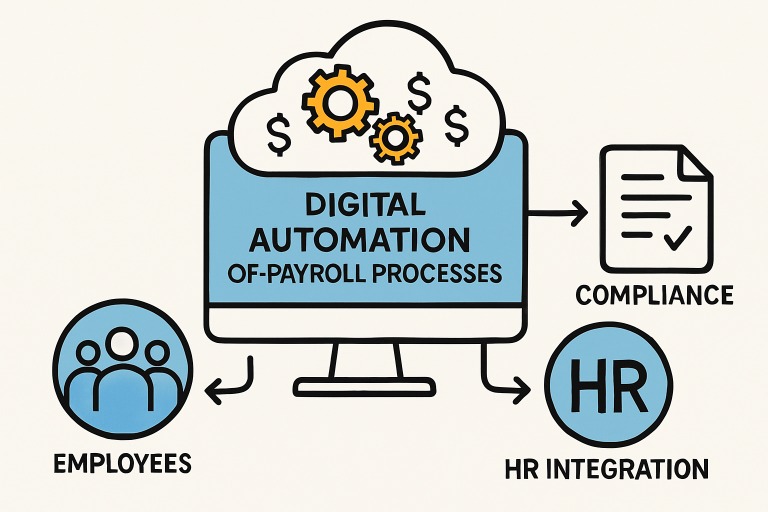
Payroll is an integral part of the broader human resources ecosystem. Integrating payroll data with HR disciplines such as time tracking, absence management, performance evaluations, and benefits administration creates a unified talent and finance strategy. By centralizing these functions, organizations gain a holistic view of workforce trends, which is essential for accurate budgeting, forecasting, and regulatory compliance. Leaders can immediately spot issues such as unexpected overtime, spikes in benefit usage, or patterns in employee turnover. In addition to improving efficiency and compliance, integrated systems help HR teams create a seamless employee experience by connecting pay, promotions, performance, and benefits into a single accessible platform. This holistic approach supports data-driven decision-making and provides organizations with a significant edge in optimizing workforce management, supporting strategic initiatives, and driving sustainable growth through actionable insights.
Challenges in Implementing Payroll Automation
Despite automation’s clear benefits, transitioning to automated payroll systems is not without its challenges. Companies must carefully select the right technology solutions for their unique needs, taking into account the size of their workforce, industry-specific compliance requirements, and integration capabilities. Implementing robust cybersecurity protocols becomes increasingly necessary, as payroll systems are prime targets for phishing attacks and data breaches. Company leaders must also deliver comprehensive training programs to upskill HR and payroll personnel so teams can fully leverage new technologies and processes. Addressing employee concerns around change management is just as important, requiring transparent communication about system benefits and expected improvements. Additionally, staying updated on evolving local and federal laws remains essential to maintaining full compliance and avoiding costly penalties, making the automation process ongoing rather than a single event.
Future Trends in Payroll Automation
The next phase of payroll automation will see the adoption of even more advanced AI and machine learning algorithms. These technologies will empower organizations to anticipate shifts in labor costs, identify policy compliance risks before they occur, and optimize workforce deployment with predictive analytics that go far beyond traditional reporting. Blockchain technology is also on the horizon for payroll, promising unalterable, transparent transaction records and enhanced security for both employers and employees. This could lead to faster processing times and seamless cross-border payments for global teams. As regulatory complexity grows and workforce expectations evolve, businesses should invest in continuous payroll innovation and employee education. Staying ahead of technical trends and fostering a culture of agility will enable organizations to remain competitive in an increasingly dynamic marketplace.
Conclusion
Automation is fundamentally reshaping the payroll management landscape and ushering in a new era of streamlined efficiency. By adopting robust automated payroll systems, companies unlock unparalleled efficiencies, reduce compliance risks, and provide employees with greater visibility and control over their pay and benefits. Payroll automation not only streamlines back-office operations but also enhances employee satisfaction and organizational agility. Staying ahead of these technology trends is vital for businesses seeking to thrive in today’s fast-paced market environment. Continuous learning, targeted investment in new tools, and ongoing process evaluation will keep payroll teams ready for the future.