
Property Records Before Closing: What Homebuyers Should Review
Key Takeaways
- Property records can reveal liens, ownership gaps, easements, unpaid taxes, and restrictions that may affect a purchase.
- A record review is different from an inspection, appraisal, or survey, and each serves a separate purpose.
- Buyers should review title-related documents, listed exceptions, and loan disclosures before signing.
- Wire instructions and last-minute payment changes should always be independently verified.
- Closing practices, costs, and recording rules can vary by state, county, lender, and contract.
Why Property Records Matter Before Closing
A home is more than a building and a lot. It also has a legal history created through deeds, mortgages, tax records, recorded restrictions, court filings, and other documents. Reviewing that history before closing helps buyers understand whether the seller can transfer the property and whether older claims may need attention.
A property can look well-maintained and still have a complicated record trail. An old loan may appear unreleased, a contractor may assert a payment claim, or a prior estate transfer may leave questions about who had authority to sign. A professional review and title insurance address related but different parts of the process: one examines recorded and other available information, while coverage may help address certain covered title issues that arise later.
Consider a buyer scheduled to close on Friday. During final review, the settlement team finds a mortgage recorded against the home that appears to remain open. The seller may be able to provide proof of payoff and obtain a release, but the transaction could be delayed until the record can be corrected.
What A Record Review May Find
A review generally looks for documents or facts that could affect ownership, use, or transfer of the property. Common examples include:
- Ownership gaps: Missing deeds, unclear transfers, or conflicts in the chain of ownership.
- Liens and claims: Mortgages, unpaid taxes, contractor liens, judgments, or assessments tied to the property.
- Easements: Rights that allow another party to use part of the land, often for access or utilities.
- Restrictions: Recorded limits that may affect construction, land use, access, or future improvements.
- Estate and authority issues: Probate matters, missing heirs, or uncertainty about a signer’s authority.
- Recording errors: Incorrect names, legal descriptions, dates, or references to other documents.
- Boundary concerns: Differences between recorded descriptions, surveys, fences, driveways, or structures.
A record review does not replace a home inspection, appraisal, survey, or legal advice. An inspection focuses on physical condition, an appraisal addresses value for lending purposes, and a survey can identify boundary-related concerns.
How The Review Works
- Identify the property: The address, parcel number, legal description, and seller information are confirmed.
- Search relevant records: The reviewer examines deeds, mortgages, liens, judgments, tax information, easements, and related filings.
- Trace earlier transfers: Prior ownership changes are reviewed for missing links or conflicting information.
- List open requirements: Potential issues are identified for the parties to resolve before closing.
- Collect corrective documents: Releases, payoff statements, affidavits, corrected instruments, or probate records may be needed.
- Close and record: After signing and funding, the deed and other required documents are submitted for recording according to local practice.
Documents Buyers Should Read
Do not wait until signing day to start reading the closing package. Ask for documents as early as they are available, then compare names, property details, costs, and loan terms with the purchase agreement and earlier loan estimates.
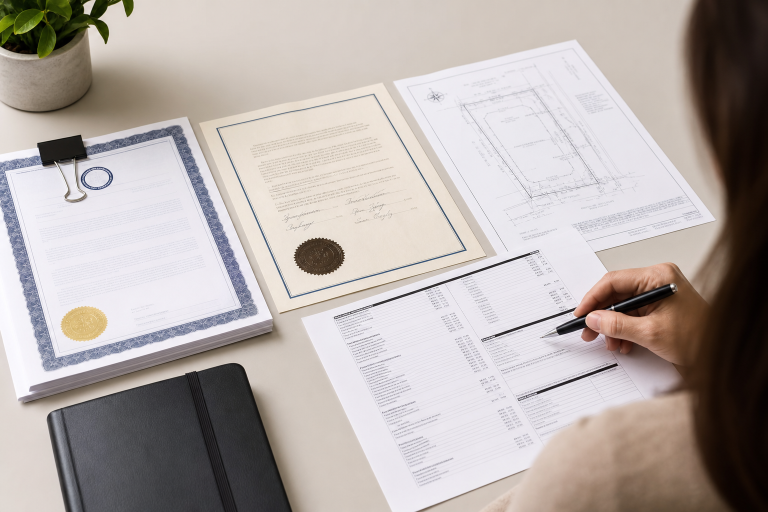
- Title commitment or preliminary report: Identifies the record owner, legal description, requirements, and exceptions.
- Survey: May show boundaries, improvements, access points, visible encroachments, and easements.
- Closing Disclosure: Shows final mortgage loan terms, projected payments, closing costs, credits, and cash needed to close.
- Payoff statements: State the amounts needed to release existing mortgages or other obligations.
- Deed: Transfers the seller’s interest in the property to the buyer.
- Affidavits: May address identity, marital status, possession, unpaid work, or other transaction-specific facts.
For most covered mortgage transactions, buyers have time for reviewing the Closing Disclosure before the scheduled closing, so use that period to ask about unfamiliar charges, terms, or changes.
Common Closing Problems And Delays
Most title-related issues are not necessarily deal breakers, but they should be understood and resolved appropriately. Common causes of delay include:
- An older mortgage remains in the public record after the loan was paid.
- A seller’s name differs from prior deeds because of marriage, divorce, or a spelling variation.
- An heir, former spouse, business partner, or trust may have an interest that requires documentation.
- Taxes, assessments, or contractor claims must be paid or released.
- A legal description does not match the contract, survey, or recorded documents.
- An easement affects a driveway, utility route, fence, or planned addition.
Some matters can be resolved with a payoff, release, or affidavit. Others may require probate work, a corrected deed, a court order, or advice from a qualified real estate attorney.
Fraud And Digital Risk
Closing fraud often relies on impersonation. A criminal may send a convincing email that appears to come from a lender, agent, seller, or settlement professional and claims that the wire instructions changed at the last minute. Treat an unexpected request to change payment details as a warning sign.
- Confirm wiring instructions by calling a trusted phone number obtained independently.
- Do not use phone numbers, links, or reply addresses contained in a suspicious message.
- Use multifactor authentication on email and financial accounts.
- Tell the settlement professional promptly if a message seems unusual.
- Contact your bank immediately if funds were sent in error or if you suspect fraud.
The FBI’s guidance on business email compromise scams also recommends using a separate channel to verify requests for changes in account information.
A Smart Buyer Checklist
- Verify the property address, parcel number, and legal description.
- Read the title commitment or preliminary report promptly.
- Ask about every listed exception and closing requirement.
- Confirm which liens, taxes, or mortgages will be released at closing.
- Review easements and restrictions before planning renovations or additions.
- Review the survey or ask whether one is appropriate for the transaction.
- Compare the Closing Disclosure with the latest Loan Estimate.
- Keep copies of the deed, settlement statement, policy documents, and disclosures.
Questions To Ask Before Closing
- Are there unresolved liens, judgments, taxes, or assessments?
- Which items will remain as exceptions after closing?
- Does the survey show an access, boundary, or encroachment concern?
- Who is responsible for resolving each open item?
- When and where will the deed be recorded?
- Which policy protects the lender, and which policy protects the owner?
- What should I do if I receive changed wire instructions?
Frequently Asked Questions
Can A Buyer Search Property Records Alone?
Yes, buyers can review many public records independently. However, interpreting older deeds, legal descriptions, liens, and court-related documents can be difficult, especially when local rules or unusual ownership histories are involved.
Does A Home Inspection Find Ownership Problems?
No. A home inspection evaluates the physical condition of the property. It does not establish ownership or identify every recorded lien, easement, restriction, or transfer issue.
Does A Clear Record Review Guarantee There Will Be No Future Dispute?
No review can eliminate every possible risk. Records can contain errors, facts may be unavailable, and fraud or undisclosed claims can occur. Buyers should read their final documents and understand the terms, requirements, and exclusions that apply.
Who Pays Title-Related Costs?
Payment customs vary by location and contract. The purchase agreement and closing disclosures should show which party is responsible for each applicable charge.
Conclusion
Property records deserve the same careful attention as price, financing, and inspection results. Reviewing the documents early gives buyers time to understand the property’s legal history, resolve questions, and avoid preventable closing-day surprises. Careful document review and independent payment verification can help make a major purchase more secure and easier to manage.