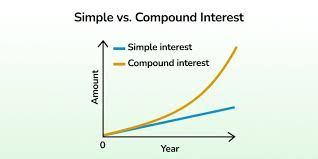
Simple Versus Compound Interest Explained
Do you know that the same amount in your bank account could grow in different ways? One is predictable and steady, whereas the other quietly accelerates over time. The main difference lies in the interest you earn from your deposits.
Before creating your bank account, you should understand simple interest and compound interest. Both these types play a role in your loans and savings. This blog simplifies the concept of different types of interest in the banking world.
What is a Simple Interest?
The amount you earn from the principal (the original amount deposited) refers to the simple interest. Simple interest is commonly found on:
- Coupon-paying bonds
- Consumer loans
- Certificates of deposit
Many investment products are available with simple interest. For instance, you might have borrowed $2,000 with a simple interest of 1% over a year. At the end of the loan tenure, you have to pay $20 in interest.
What is Compound Interest?
The calculation of the compound interest is based on the principal and the accumulated interest. It generates more interest compared to simple interest. In most cases, compound interest is applied to mortgages and savings accounts. It helps you grow your funds faster in the bank’s savings account.
You may earn compound interest depending on the compounding period, such as monthly and quarterly. This period determines the frequency of adding interest to your account.
Comparing Simple and Compound Interest
Simple interest ensures predictability, while compound interest rewards your patience. For instance, when you compare various savings options, such as ING’s term deposits interest rates, understand the frequency of compounding interest.
Let us discuss the factors that differentiate simple interest from compound interest:
Growth pattern
Simple interest leads to a fixed growth rate of your wealth. But, compound interest results in an exponential growth of your fund.
Use cases
Fixed-income securities, personal loans, and car loans are a few applications of simple interest. On the contrary, compound interest is found in credit card balances and mutual funds.
Financial effects
Compound interest is an advantageous option for long-term investors, as it boosts returns through reinvestment. But, it may increase the borrowing cost for your mortgage with frequent compounding periods.
Why is Interest an Important Factor for Investors?
Interest has a direct influence on the cost of borrowing and investment growth. Check the reasons to understand the concept of interest.
Evaluating loan terms and credit interest
Borrowers should understand how the interest is calculated based on the term deposit account. Awareness helps you negotiate better terms.
Manage costly debt
Compounding interest on loans may escalate your debt. Thus, you should try to reduce your financial strain and free up your investment resources.
Summary
Simple and compound interest may seem to be basic financial concepts. However, they have a significant effect on your financial future. The former offers steady growth, whereas the latter ensures faster financial gains. You must know when to apply each option. A small step in choosing the type of interest will lead to bigger wins.