Why Flat-Roof Commercial Buildings Are Switching to White Membrane Roofing
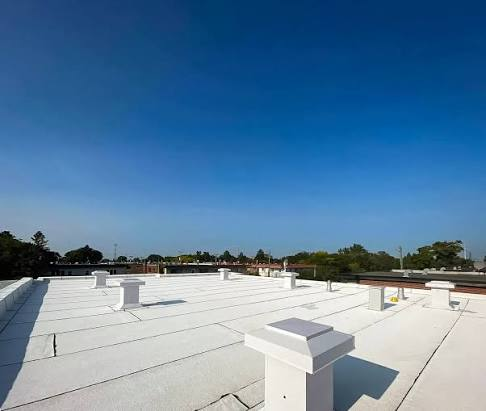
Walk through any commercial district and look up. The roofscape has changed. Flat rooftops that used to be a sea of black and gray are now bright white, and it’s not an aesthetic trend. Building owners are making this switch because the financial math finally became impossible to ignore. Cooling costs, code compliance, and long-term durability have converged at the same point, and white single-ply membrane roofing sits right at that intersection.
Thermoplastic polyolefin (TPO) is the white membrane most of them are landing on. It’s taken over the commercial flat-roof market because it solves three problems at once: heat gain, energy bills, and regulatory headaches. If you manage or own a commercial property with a flat or low-slope roof, here’s what’s actually driving this shift, and what you need to think about before committing to it.
The Heat Problem Dark Roofs Have Been Making Worse
A flat commercial roof has maximum solar exposure. There’s no slope to reduce the angle of the sun, so on a clear summer afternoon, a dark membrane can reach surface temperatures north of 150°F. That heat radiates straight down into the conditioned space below, forcing HVAC systems to work harder for longer. The cost isn’t invisible. It shows up every month on the utility bill.
Reflective roofing is the direct counter to this. According to the U.S. EPA’s ENERGY STAR cool roofs program, a clean white roof that reflects 80% of sunlight stays about 50°F cooler than a gray roof that reflects only 20%, based on Lawrence Berkeley National Lab data. That 50-degree difference in surface temperature translates to measurably less heat entering the building and a smaller cooling load.
White TPO sits comfortably in that high-reflectance category. Initial solar reflectance values for white TPO typically run between 0.78 and 0.87, meaning the membrane bounces back the vast majority of solar energy before it ever converts to heat. Even after three years of weathering, aged reflectance holds in the 0.68 to 0.73 range, still well above most competing materials.
Why California’s Title 24 Made the Decision for Many Building Owners
For commercial properties in California, the switch to white reflective roofing stopped being optional. California’s Title 24, Part 6, updated by the California Energy Commission and effective January 1, 2026, sets mandatory cool roof requirements covering thermal emittance, three-year aged reflectance, and Solar Reflectance Index values for new construction and re-roofing projects on nonresidential buildings, multifamily structures, and more.
Low-slope commercial roofs carry some of the strictest requirements in the code. The standards mandate a minimum aged solar reflectance of 0.63 and thermal emittance of at least 0.75. White TPO membranes meet and typically exceed both thresholds right out of the box, which is a significant reason why roofing contractors across Southern California now default to recommending them for flat-roof replacements.
If you’re replacing a commercial roof in Orange County and you’re not spec’ing a compliant cool roof, you’re not just leaving money on the table. You’re risking permit issues and potential code violations. That’s the compliance angle that’s pushed a lot of fence-sitters into action.
“The roofing system plays a critical role in regulating indoor temperatures, reducing demand on HVAC systems, and contributing to overall building performance.” This reflects the consensus position among commercial building energy consultants and is consistent with the rationale behind California’s energy code mandates for nonresidential low-slope roofs.
What the Numbers Actually Look Like
Energy efficiency claims are easy to make. Here’s a table comparing TPO against two common alternatives across the factors that matter most to a commercial building owner:
| Factor | White TPO | Black EPDM | Modified Bitumen |
| Initial Solar Reflectance | 0.78 – 0.87 | ~0.06 | ~0.06 – 0.20 |
| Title 24 Low-Slope Compliance (CA) | Yes (standard white) | No | Requires coating |
| Typical Lifespan | 15 – 30 years | 15 – 25 years | 12 – 20 years |
| Seam Method | Heat-welded (watertight) | Adhesive/tape | Torch-applied |
| Urban Heat Island Contribution | Low | High | Medium to High |
The reflectance gap between white TPO and black EPDM is dramatic. EPDM absorbs nearly all the solar energy hitting it. For a building in a warm climate, that gap in absorbed heat directly maps to a gap in cooling costs over the life of the roof.
![]() The Reflectance Decision Matrix: Choosing the Right Membrane for Your Roof
The Reflectance Decision Matrix: Choosing the Right Membrane for Your Roof
Not every flat roof needs the same solution. Here’s a practical framework, which I’m calling the Reflectance Decision Matrix, for thinking through membrane selection based on your building’s specific situation:
- High cooling load, sun-exposed roof, California climate: White TPO is the default right answer. Title 24 compliance is mandatory, and the energy savings justify the material cost in most cases.
- Moderate climate, budget-constrained reroof: White TPO still competes well. Its installed cost runs lower than PVC while delivering comparable reflectance performance.
- Existing black EPDM roof in good structural condition: A reflective coating is worth pricing. But if the membrane is aging, a full TPO replacement often beats the lifetime cost of coating an old system.
- Heavy rooftop equipment or frequent foot traffic: Specify a 60-mil or thicker TPO membrane rather than the standard 45-mil. The thicker sheet handles punctures from maintenance traffic without compromising the waterproofing.
- LEED or green building certification goal: White TPO’s solar reflectance values typically qualify for cool roof credits under common certification frameworks. Confirm CRRC ratings with your contractor before specifying.
This framework isn’t meant to replace a professional assessment, but it tells you which questions to bring to the conversation.
What Building Scale Has to Do With It
Commercial buildings cover a lot of roof area. According to the U.S. Energy Information Administration’s 2018 Commercial Buildings Energy Consumption Survey (CBECS), the mean floorspace per floor for all U.S. commercial buildings was 11,061 square feet. For single-story structures, that’s essentially the entire roof footprint. At that scale, even modest improvements in solar reflectance produce meaningful reductions in cooling demand every single year.
Scale is why TPO’s energy benefits compound in a way that doesn’t happen with residential roofing. A homeowner saves on one cooling season. A commercial building owner saves across thousands of square feet, for 20 to 30 years, potentially across multiple tenants paying utilities. The math works differently at this size.
For teams working on flat-roofed commercial properties in Southern California, understanding those regional specifics is where contractors who specialize in the local climate earn their value. Firms that focus on commercial TPO roofing in Orange County can navigate the intersection of local Title 24 climate zone classifications and manufacturer warranty requirements, which differ from the generic national picture most roofing content describes.
Practical Steps Before You Sign a Contract
Before committing to a TPO re-roof on a commercial property, work through this short checklist with any contractor you’re evaluating:
- Confirm the proposed membrane thickness (45-mil, 60-mil, or 80-mil) and get the manufacturer’s CRRC-listed solar reflectance and thermal emittance values in writing.
- Ask for documented Title 24 compliance if the building is in California. The contractor should be able to pull the permit and show the compliance pathway, not just assert it.
- Verify the warranty terms. Most TPO manufacturer warranties run 15 to 30 years but require certified installation. A warranty that requires certified work is only worth what the contractor’s certification is worth.
- Ask about seam inspection after installation. Heat-welded seams are TPO’s biggest durability advantage, but poor welds are also the most common failure point. Any reputable contractor will offer a post-installation seam inspection as part of the job.
- Request references from comparable commercial projects, not residential jobs. Flat-roof commercial work is a different discipline from residential steep-slope roofing, and experience on the right building type matters.
The shift to white membrane roofing on commercial flat roofs isn’t slowing down. Building codes are tightening, energy costs are staying high, and the performance gap between reflective and absorptive membranes keeps proving itself on real utility bills. The question for most commercial building owners isn’t really whether to make the switch. It’s when, and with whom.