What to Do During a Plumbing Emergency in Provo, Utah: A Safety Guide
Key Takeaways
- Put personal safety first during any plumbing emergency.
- Shut off local or main water valves only when safe.
- Avoid using water during a sewer backup.
- Keep people and pets away from contaminated water.
- Stay away from electrical hazards, gas leaks, and unstable ceilings.
- Contact the city when a problem may involve public infrastructure.
- Move belongings only when the area is safe to enter.
- Give plumbers clear details about the problem and affected areas.
A plumbing emergency can develop quickly, whether it starts with a burst pipe during a cold FrontRunner morning, an overflowing toilet in a student rental, or wastewater appearing near a basement floor drain. The right first steps can protect people, reduce property damage, and make the repair process less stressful. When active water, sewage, or an unsafe condition cannot wait, contacting a 24 hour emergency plumber in Provo, Utah can help you address the immediate problem. Stay calm and focus on safety before cleanup. Do not take risks to save flooring, furniture, or belongings. Water near electrical equipment, exposure to sewage, a suspected gas leak, or a sagging ceiling can turn a plumbing issue into a more serious emergency.
Recognize a True Plumbing Emergency
A plumbing problem is urgent when it creates an active threat to the home, business, occupants, or neighboring units. Burst pipes, rapidly spreading leaks, overflowing fixtures that will not stop, sewer backups, major water-heater leaks, and a sudden loss of water can all require prompt attention. A slow drip or isolated faucet problem may be able to wait if its local water supply can be safely shut off. Move faster when water is entering walls or ceilings, when sewage is present, or when the issue occurs near electrical equipment. If you smell gas, see smoke, or believe there is a fire, leave the area and call 911 from a safe location.
Check for Immediate Safety Hazards
Protect people before property. Keep away from standing water near outlets, extension cords, appliances, electrical panels, or damaged wiring. Do not walk into a flooded room merely to reach a valve. Keep children and pets away from dirty water, and avoid touching sharp debris that may be hidden below the surface. Water affected by a sewer backup should be treated as contaminated. The CDC explains that standing floodwater can contain hazards that cause illness or injury, including waste, germs, and physical debris. If the area is unsafe, wait for qualified help rather than attempting cleanup yourself.
Stop the Water When It Is Safe
- Use the local fixture shutoff if the leak is limited to one toilet, sink, washing machine, dishwasher, or water heater.
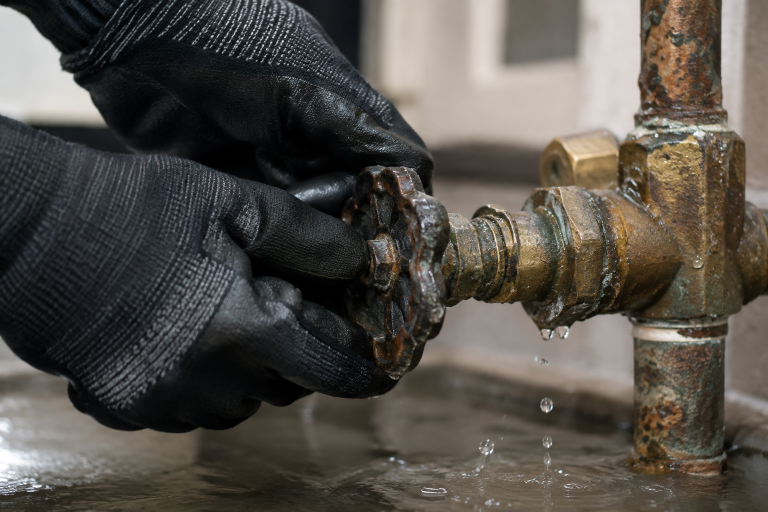
- Use the main water shutoff if a pipe has burst or the leak cannot be isolated.
- Do not force a valve that is stuck, corroded, leaking heavily, or difficult to reach safely.
- Avoid wet electrical equipment while trying to control the water.
- Tell the responding plumber whether the water stopped completely or continued flowing after the valve was closed.
Respond to a Sewer Backup
Stop using water immediately. Do not flush toilets or run sinks, showers, dishwashers, or washing machines, because additional water can force more wastewater back through the lowest drain. Keep everyone away from the affected area, especially if wastewater has reached carpet, flooring, cabinets, or personal belongings. Renters should notify a landlord or property manager promptly. In apartments, condos, and other multi-unit properties, the source may involve more than one unit or a shared line. Clearing the blockage is important, but it does not automatically remove contamination or repair water-damaged materials.
Know When to Contact the City
Some emergencies occur within a private plumbing system, while others may involve public water or sewer infrastructure. Contact the city if multiple nearby properties have the same water or sewer issue, if water is surfacing outside, or if the problem appears to be connected to a public main. Provo residents can use the Public Works contact information for service calls and water-resource emergencies to report a suspected municipal issue.
Responsibility can depend on where the failure occurred. Share any information from utility staff with the plumbing professional, property manager, or restoration provider helping at the property.
Limit Water Damage Without Taking Risks
- Move electronics, boxes, rugs, and furniture away from clean water when the area is safe to enter.
- Place a bucket or towels under a clean-water drip if doing so will not create a slipping or electrical hazard.
- Stay away from bulging drywall, sagging ceilings, and walls that appear unstable.
- Do not use household towels, vacuums, or mops on sewage-contaminated water.
- Do not pour chemical drain cleaner into a backed-up toilet or drain.
- Avoid cutting into walls or ceilings to locate a hidden pipe.
Prepare Details Before Calling for Help
Clear information helps responders understand the situation without requiring you to diagnose the cause. Before calling, gather the property address and unit number, the first location where water appeared, the rooms or fixtures affected, and whether water is still flowing. Note whether the water appears clean, hot, dirty, or sewage-related. Also report gas odors, electrical concerns, inaccessible shutoff valves, and the name and phone number of the person who can provide access or approve urgent work. If it is safe, take a few photos after completing the immediate safety steps.
Handle Cleanup, Documentation, and Follow-Up
Emergency plumbing repair and water mitigation are related but different tasks. A plumber may stop the leak or clear the line, while drying, cleaning, and repairing affected materials may require separate work. Record when the problem began, what valves were closed, which areas were affected, and who was contacted. Keep photos, invoices, repair notes, and messages in one place. Surfaces can look dry while moisture remains under flooring, behind cabinets, or inside walls. Do not return the affected plumbing system to normal use until it has been assessed and is safe to operate.
Reduce the Chance of Another Emergency
- Locate and label the main water shutoff before an emergency happens.
- Check visible supply lines, appliance hoses, water-heater connections, and valves for wear or moisture.
- Address recurring clogs, slow drains, stains, low pressure, and unexplained water use early.
- Protect exposed pipes before freezing weather arrives in Provo.
- Keep a flashlight, gloves, towels, and buckets where household members can find them.
- Make sure every adult occupant knows the basic shutoff and emergency plan.
Common Questions About Plumbing Emergencies
Should the main water valve always be shut off?
No. A local fixture valve may be enough for a contained issue. Shut off the main valve for a major leak only if it is safe to reach and operate.
Is a sewer backup a plumbing problem or a cleaning problem?
It can be both. The drainage issue needs repair, while contaminated materials may need professional cleaning, removal, drying, or restoration.
Can a plumbing emergency wait until morning?
That depends on the risk. Active leaks, sewage backups, gas odors, and electrical hazards should not be treated like minor fixture problems. A contained drip may be able to wait after its water supply is safely shut off.
Conclusion
When a plumbing emergency happens in Provo, put safety first, stop the water only when it is safe, and avoid adding water during a sewer backup or serious drainage problem. Keep people away from contaminated water, electrical hazards, damaged fixtures, or areas where the flooring may be slippery. If possible, identify the affected fixture or shutoff valve, protect nearby belongings from water exposure, and document the problem with photos before cleanup or repairs begin. Communicate clear details to the right responder, including where the water is coming from, how long the problem has been occurring, and whether multiple fixtures are affected. A simple plan helps households, renters, and property managers act quickly when an unexpected plumbing problem disrupts the day, reduces confusion, and helps the appropriate professional respond with useful information.