Lab Grown Gemstone Jewelry Manufacturer: What Makes a Gemstone Jewellery Piece Worth Keeping?
A good piece of gemstone jewellery does something that many accessories struggle to do: it develops character. It might be the colour that first catches someone’s attention, the unusual shape of the stone, or a small detail that makes the piece feel different from everything else in a jewellery box. With lab-grown gemstones entering more contemporary collections, brands have another way to explore colour, design, and individuality without relying entirely on traditionally sourced stones. The term “lab-grown gemstone” covers a range of materials and production methods. Genuine synthetic gemstones are created in laboratories and can share the chemical, physical, and optical characteristics of their natural counterparts, while simulants are different materials designed to imitate another gemstone. That distinction matters, particularly when brands communicate product information to customers. For jewellery businesses, the interesting question is no longer simply whether a gemstone is natural or laboratory-grown. It is whether the finished piece has the design quality, craftsmanship, durability, and personality that make someone want to keep wearing it. That is where the relationship with a Lab Grown Gemstone Jewelry Manufacturer becomes important.
Why Lab Grown Gemstone Jewelry Manufacturers Are Giving Colour a Bigger Role
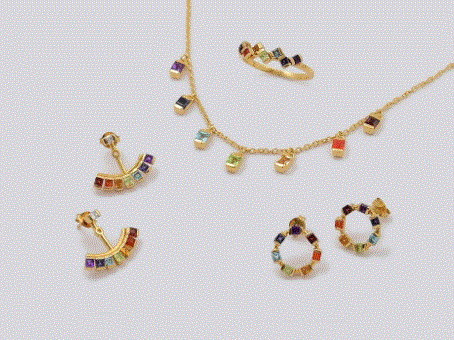
Colour has always been one of the strongest reasons people fall in love with gemstones. A deep blue, vivid green, soft pink, rich red, or unusual colour-changing effect can completely change the personality of a jewellery design. Laboratory-grown gemstones give designers another creative tool because some synthetic materials can be produced with relatively consistent colour and crystal characteristics. GIA notes that synthetic gem materials can be produced in different colours and, depending on the material and process, can offer consistent colour and crystal shape. For Lab Grown Gemstone Jewelry Manufacturers, this opens up interesting possibilities for collection building. A brand can develop a signature colour palette rather than treating each gemstone as a one-off purchase. A collection might centre around blue stones, for example, and use different cuts and settings to create several products that still feel connected. That consistency can be particularly useful for modern brands. Customers may want jewellery that looks coordinated without being completely identical. Colour becomes the thread connecting rings, earrings, pendants, and bracelets. The key, however, is not to make every stone look artificially perfect. Part of the appeal of gemstone jewellery is visual interest. Good design knows when to embrace colour variation, when to use contrast, and when to let the stone become the main attraction.
How a Lab Grown Gemstone Jewelry Manufacturer Turns a Stone Into a Story
A gemstone by itself can be beautiful, but the setting around it determines how that beauty is experienced. A round stone in a classic bezel can communicate something completely different from the same stone placed in an angular, contemporary setting. This is where manufacturing expertise becomes part of the creative process. A Lab Grown Gemstone Jewelry Manufacturer can help a brand decide how a particular stone should be presented rather than simply producing a predetermined design. Cut, proportions, setting style, metal colour, and finishing all influence the final appearance. Even small changes can make a gemstone look larger, softer, more dramatic, or more understated. Designers can also use the natural visual qualities of different laboratory-grown materials to create distinct identities. Some synthetic gemstones, including materials such as synthetic corundum, spinel, emerald, alexandrite, and others, can be created through different laboratory growth methods. GIA describes melt, flux, and other growth processes used for synthetic gem materials, with each method suited to particular materials and characteristics. The result is a much broader design conversation. Instead of asking only, “Which stone should we use?”, brands can ask, “What story should this colour, cut, and setting tell?”
What Makes Lab Grown Gemstone Jewelry Manufacturers Important for Everyday Jewellery?
Statement jewellery may grab attention, but everyday jewellery often creates stronger long-term relationships with customers. People tend to keep reaching for pieces that are comfortable, versatile, and easy to combine with different outfits. This creates specific manufacturing requirements. A gemstone ring intended for frequent wear needs a secure setting and sensible proportions. Earrings need to be comfortable enough for extended use. Pendants should balance properly and avoid unnecessary weight. These practical details may not appear in a mood board, but they have a major impact on the finished product. For Lab Grown Gemstone Jewelry Manufacturers, the challenge is therefore to combine visual impact with everyday functionality. Sampling becomes particularly important here. A CAD model can show dimensions and proportions, but a physical prototype reveals how the piece actually feels. Is the ring comfortable? Does the stone sit correctly? Does the pendant hang naturally? Are the edges smooth? Is the setting visually balanced? These questions are easier to answer when designers and manufacturers work together before production begins. The most successful gemstone collections often avoid choosing between beauty and practicality. They make the two work together.
How Lab Grown Gemstone Jewelry Manufacturers Can Support More Creative Designs
One of the advantages of laboratory-grown gemstone materials is the opportunity to experiment with colour and design without being limited entirely by the availability of particular natural stones. That does not mean every lab-grown material is identical to every natural gemstone, or that all can be produced through the same process. Different materials have different growth methods, properties, and commercial considerations. For brands, that variety can encourage experimentation. Instead of designing another conventional solitaire, a jewellery business might create asymmetrical earrings using contrasting colours. A pendant could combine multiple shapes of the same gemstone. A ring could use an unusual cut as its defining feature. A collection could even use colour combinations that would be difficult to build around a single traditional gemstone category. The manufacturer plays an important role in determining which ideas are commercially practical. Intricate settings, unusual stone shapes, delicate structures, and multiple gemstone combinations can create production challenges. A knowledgeable manufacturing partner can identify these issues early and suggest modifications that preserve the creative concept. This is where collaboration becomes more valuable than simply outsourcing production. The designer brings the visual idea, while the manufacturer helps determine how that idea can survive the realities of casting, setting, polishing, finishing, and repeat production.
What Should Brands Look for in Lab Grown Gemstone Jewelry Manufacturers?
Choosing between Lab Grown Gemstone Jewelry Manufacturers should involve more than looking at photographs of finished products. Brands need to understand the complete development and manufacturing process. First, ask about gemstone expertise. Does the manufacturer understand the specific laboratory-grown materials being used? Can the team explain differences in growth methods, colour, cutting, durability, and suitability for particular jewellery designs? Material disclosure should also be handled carefully. Industry guidance distinguishes laboratory-grown or synthetic gemstones from simulants, and transparent communication about what the customer is buying is essential. In the United States, for example, the Federal Trade Commission requires laboratory-produced gem materials to be described clearly so their non-natural origin is not concealed. Quality control is another major consideration. Brands should understand how gemstones are inspected, how settings are checked, and how finished jewellery is evaluated before shipment. Sampling and scalability matter as well. A manufacturer may produce an impressive prototype but struggle to reproduce the same quality across hundreds or thousands of pieces. Ask how specifications are documented and how consistency is maintained during repeat production. Finally, communication should be part of the evaluation. The right partner should be comfortable discussing design limitations and offering solutions instead of simply saying yes to every idea.
How a Lab Grown Gemstone Jewelry Manufacturer Can Help Build a Memorable Collection
The strongest gemstone collections are rarely memorable because they contain expensive-looking stones alone. They are memorable because the entire product feels considered. Colour, shape, setting, metal, proportions, finishing, and storytelling all work together. A good Lab Grown Gemstone Jewelry Manufacturer can contribute to that process by helping brands move from a general concept to a production-ready product without losing the original creative intention. This becomes especially important when a brand wants to establish a recognisable identity. Perhaps the collection is known for vibrant colour. Perhaps it focuses on minimalist jewellery with unexpected gemstones. Maybe the brand uses unusual cuts or creates modern interpretations of classic designs. Whatever the direction, manufacturing consistency allows that identity to appear across multiple products. There is also an opportunity to create jewellery with greater emotional relevance. Birthstones, meaningful colours, personalised designs, and symbolic shapes can make gemstone pieces feel connected to the person wearing them. The laboratory-grown origin becomes one part of the product story rather than the entire story. Ultimately, a gemstone jewellery piece becomes worth keeping when it continues to feel relevant after the initial excitement of purchase has passed. It should be attractive enough to notice, comfortable enough to wear, durable enough to trust, and distinctive enough to feel personal. That is the real opportunity for modern gemstone brands. Lab-grown materials can provide another avenue for colour and creative experimentation, but the lasting value still comes from thoughtful design and good craftsmanship. When designers and manufacturers work together from the beginning, the result is not simply a gemstone set into metal. It is a piece of jewellery with a reason to exist—and, ideally, a reason for someone to keep wearing it.