Which Home Renovations Are Actually Worth It for Portland Homeowners
Most homeowners get this backwards. They pick the renovation that excites them most, spend $40,000 on a spa-like master bath, and then discover at resale that buyers barely noticed it. Meanwhile, a $4,500 garage door replacement would have done more for the sale price. Choosing the right project before you spend a dime is where the real value gets made or lost, and for Portland homeowners specifically, the local market adds a layer of decisions that national guides rarely address. The goal here is simple: give you a clear framework for deciding which renovations are worth your money and which ones feel great but quietly drain your budget.
The National Spending Picture (And Why It Matters for Your Decision)
Home renovation spending in the U.S. has grown dramatically over the past several years. According to the National Association of Realtors’ 2025 Remodeling Impact Report, Americans spent an estimated $603 billion on home remodeling projects in 2024. That’s not a rounding error. It reflects a generation of homeowners who are choosing to invest in their existing properties rather than move into an expensive new one.
But here’s what that number hides: a huge portion of that money goes toward projects with modest financial returns. The same NAR report found that the top-performing projects for cost recovery at resale were small, unglamorous upgrades. A new steel front door returned 100% of its cost. A closet renovation returned 83%. Meanwhile, a full kitchen gut-renovation often returns far less than owners expect.
So the question isn’t “should I renovate?” Almost everyone eventually does. The question is which category of project you’re making. Are you renovating for enjoyment, for resale return, or ideally for both? Those are genuinely different decisions, and conflating them is how you end up disappointed.
Portland’s Housing Stock Changes the Math
Portland has a large supply of older homes, and that matters a lot for renovation budgeting. According to the U.S. Census Bureau’s 2021 American Housing Survey, about 61% of owners of older homes started a home improvement project between 2019 and 2021, and the median age of all owned homes nationwide was 41 years. Portland skews even older in many neighborhoods, which means that a renovation budget in Sellwood or Irvington carries risks that a project in a newer suburb simply doesn’t.
Older homes frequently hide surprises. Open a wall in a pre-1980 Craftsman bungalow in Northeast Portland, and you might find knob-and-tube wiring that needs full replacement before any finish work can begin. That’s not a contractor being difficult. That’s Oregon building code. One local contractor quote scenario illustrates this perfectly: a homeowner in the St. Johns neighborhood received a verbal estimate of $28,000 for a kitchen refresh, but the written itemized version climbed to $41,000 once electrical upgrades, permit fees, and proper lead paint abatement were included for their 1952 home. The second quote from a different contractor came in at $44,000, but included everything upfront. The lower number was never real. The lesson is that in Portland’s aging housing stock, your renovation budget should include a 15% to 20% contingency before you begin. Not after you find the problem.
The ROI Clarity Framework: How to Categorize Any Project Before You Commit
Before calling a single contractor, run every project idea through this three-part filter. I call it the ROI Clarity Framework, and it’s the fastest way to cut through the noise.
- Classify the intent. Are you renovating because you want to enjoy the space, because you plan to sell within two years, or because something is broken and deferred maintenance is costing you? Each intent leads to a different project list.
- Check the neighborhood ceiling. Over-improving for your block is real. If every comparable home in your Portland zip code sells for $520,000 to $580,000, a $90,000 kitchen renovation will not push your sale price to $650,000. Buyers won’t pay for it. Local comps set the ceiling, not your renovation budget.
- Score for dual return. The best projects score high on both enjoyment and resale. A minor kitchen refresh, a new front door, and exterior paint hit both. A luxury home theater hits neither for most buyers.
Run every idea through those three questions before you spend a dollar on design renderings.
Projects Worth Prioritizing in Portland
| Project | Typical Portland Cost Range | Resale ROI (2025 National) | Portland-Specific Note |
| Garage Door Replacement | $4,000 – $6,500 | 268% | Detached garages common in older neighborhoods; high visual impact |
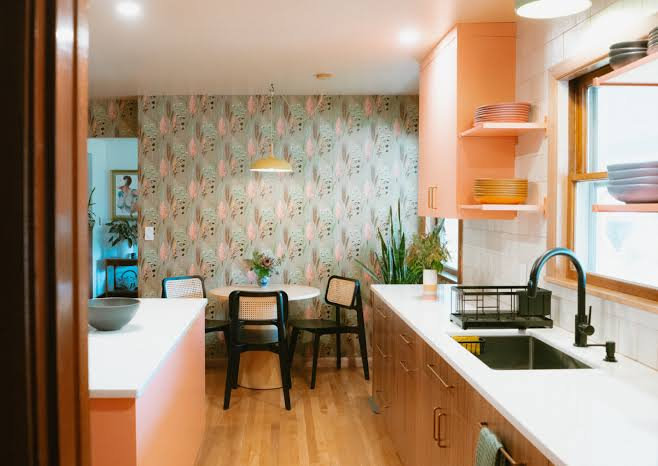
| Minor Kitchen Remodel | $18,000 – $35,000 | 113% | Refresh cabinets and countertops without moving plumbing |
| Steel Front Door | $2,000 – $4,000 installed | 100% | Works especially well on Craftsman and bungalow facades |
| Exterior Paint | $3,500 – $8,000 | Strong curb appeal; widely reported above 80% | Portland’s wet climate makes quality exterior paint a near-necessity |
| Full Kitchen Overhaul | $55,000 – $100,000+ | ~51% | High enjoyment, low financial return; better for long-term stays |
ROI figures for national data are sourced from the 2025 Cost vs. Value Report. Portland cost ranges reflect Pacific Northwest labor and material pricing, which generally runs higher than the national average due to licensing requirements and local demand.
“Because the kitchen is the most important room on the radar of home buyers, a cost-effective upgrade will net you the biggest return when you list your home for sale.”- Brian Mollo, CEO of Trusted House Buyers, quoted in the 2025 Cost vs. Value Report analysis. That quote captures something important. The word “cost-effective” is doing a lot of work. Mollo isn’t saying gut your kitchen. He’s saying refresh it without moving anything structural. That distinction separates a 113% return from a 51% one.
Renovation Decisions Touch Your Finances More Than You Think
A renovation budget of $60,000 to $80,000 isn’t just a home design decision. It’s a major financial commitment that interacts with your home equity, your liquidity, and your long-term net worth. Many Portland homeowners tap home equity lines or refinance to fund major projects, and whether that makes sense depends heavily on your broader financial picture, including interest rates, your timeline in the home, and what the renovation actually does to the property’s market value.
Talking through those numbers with a Financial Advisor in Portland, OR before you sign a contractor agreement is the kind of step most people skip and later wish they hadn’t. The right project chosen at the wrong time financially can create stress that no beautiful new kitchen fully offsets.
The Projects Most Portland Homeowners Should Probably Skip
Sunrooms and home additions consistently return less than 50% at resale. Luxury master bath renovations, while genuinely enjoyable, also tend to land in the 24% to 36% return range nationally. And swimming pools? In Portland’s climate, with roughly 144 rainy days per year, a pool is almost purely a lifestyle expense. It will not help your sale price and may actually narrow your buyer pool.
That doesn’t mean you should never do them. If you plan to stay in your home for 10 years and a backyard pool would genuinely improve your life, that’s a legitimate reason to spend the money. Just go in clear-eyed about what the return is and what it isn’t.
A Practical Checklist Before You Start Any Renovation
- Pull two or three recent comparable sales in your neighborhood to establish your ceiling price
- Build in a 15% to 20% contingency for hidden conditions, especially in pre-1980 homes
- Get at least two written, itemized quotes and compare them line by line
- Verify contractor licensing through the Oregon Construction Contractors Board before signing
- Decide which intent bucket this project lives in: enjoyment, resale, or deferred maintenance
- Review how the project fits into your overall financial plan before financing it
Portland’s housing market rewards homeowners who are thoughtful about where they spend. The homes that command strong offers are rarely the most over-renovated ones on the block. They’re the ones where every dollar of improvement is visible, relevant to buyers, and priced right relative to the neighborhood. That combination doesn’t happen by accident. It happens by deciding carefully, early, before the first contractor walks through the door.