A Simple 2026 Guide to Coordinating Ribbon, Bows, and Wreaths Across the Home
Key Takeaways
- Choose a small color palette before buying or making décor.
- Repeat the same ribbon, texture, or accent in at least three areas.
- Use wreaths as anchors and bows as smaller visual links.
- Mix materials, but keep the overall color story controlled.
- Scale ribbon and wreaths to the size of each space.
- Fresh greenery needs care, while faux pieces offer easier storage and reuse.
- A few well-placed details often look better than filling every surface.
Table of Contents
- Why Coordination Works
- Choose a Color Story First
- Match Ribbon Style to the Space
- Use Wreaths as Visual Anchors
- Place Bows With Purpose
- Connect Different Rooms
- Choose Fresh or Faux Greenery
- Avoid Common Decorating Mistakes
- A Seven-Day Decorating Plan
- Final Check Before Guests Arrive
Coordinated seasonal decorating does not require a perfectly matched theme, a large budget, or a house full of new items. It starts with a few intentional details that repeat from room to room. Whether you are gathering supplies from a specialty gift shop in Holladay, Utah or refreshing decorations you already own, a clear plan helps wreaths, ribbon, and bows feel connected rather than random.
The goal is simple: create a home that feels collected, welcoming, and personal. Use one color story, repeat a few textures, and give each decorative piece a purpose. A front-door wreath may establish the look, while smaller bows, garlands, and gift wrap carry that idea through the rest of the home.
1. Why Coordination Works
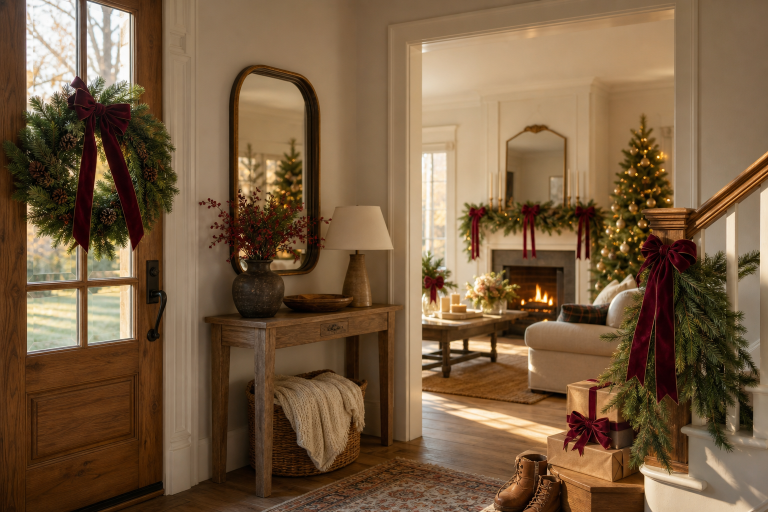
Repeated colors and shapes give the eye a visual path to follow. That does not mean every room needs the same wreath or bow. Think “related, not identical.” For example, burgundy velvet ribbon on an entry wreath can reappear as a narrow dining table accent and a gift-wrap detail. The rooms will feel connected, but each can still have its own mood.
2. Choose a Color Story First
Choose two or three main colors before shopping, crafting, or pulling bins from storage. Begin with a base color such as evergreen, cream, white, wood, or natural greenery. Add a supporting color such as navy, burgundy, red, blush, gold, or silver. Finish with a small accent, including bells, berries, brass, pine cones, or a metallic trim.
- Evergreen, ivory, and brass create a warm traditional look.
- Navy, white, and silver feel crisp and wintery.
- Burgundy, cream, and wood feel rich without being overly formal.
- Sage, blush, and champagne offer a softer palette.
Take a quick photo of each room before choosing supplies. It is easier to notice competing wall colors, flooring tones, and existing furniture from a photo than when standing in the space.
3. Match Ribbon Style to the Space
A ribbon is often the easiest way to tie different decorations together. Velvet adds depth, satin reflects light, grosgrain feels tailored, burlap brings texture, plaid adds pattern, and sheer ribbon keeps an arrangement airy. Wired ribbon is especially useful for large bows because it holds loops and tails in place. If you are building a wreath from scratch, this holiday wreath-building guide offers practical information on frames, greenery, florist wire, and secure finishing methods.
Use wide ribbon for front doors, mantels, staircases, and large wreaths. Narrow ribbon works better on napkins, cabinet handles, mini wreaths, and gift tags. When your color palette is restrained, vary the texture rather than adding another color.
4. Use Wreaths as Visual Anchors
A wreath establishes the main color and texture of a space, making it a natural starting point. Hang one on the front door, above a mantel, on dining-room windows, kitchen cabinets, bedroom doors, or a covered porch wall. Match its scale to the surface. A small wreath can disappear on a large door, while two or three smaller wreaths may suit a wide mantel better than one oversized piece.
Symmetrical placement feels classic and formal. Asymmetrical placement, such as a bow positioned slightly to one side, feels relaxed and contemporary. Use secure hooks, keep walkways clear, and ensure outdoor pieces can handle wind and changing weather.
5. Place Bows With Purpose
Bows work best as visual punctuation, not as decoration on every available surface. Add one to the top or side of a wreath, at the center of a door wrap, on a porch planter, at the end of a garland, or on wrapped gifts. The bow should relate to the object beneath it. A large planter can handle a generous bow, while a small cabinet wreath needs a simpler knot or short tails.
Trim ribbon tails at an angle or cut a neat dovetail notch for a polished finish. One oversized bow in a prominent area can create a focal point without adding clutter.
6. Connect Different Rooms
- Entryway: Use the main wreath and strongest color accent.
- Living room: Repeat ribbon on a mantel, tree, or basket of blankets.
- Dining room: Add the palette through napkin ties, chair backs, or a centerpiece.
- Kitchen: Keep it light with a mini wreath or bow on an open shelf.
- Bedroom: Use softer details, such as neutral greenery and narrow ribbon.
- Gift area: Use leftover ribbon to echo the colors used elsewhere.
7. Choose Fresh or Faux Greenery
Fresh greenery adds scent, natural variation, and texture, but it needs cool conditions and distance from heat sources. Faux greenery is easy to reuse, store, and update with new ribbon each year. A mixed approach often works best: use fresh greenery in one focal area, such as the front entry, and faux pieces in rooms where maintenance is less convenient.
- Keep fresh greenery away from vents, fireplaces, and direct sunlight.
- Check outdoor pieces after rain or wind.
- Store ribbon loosely to avoid deep creases.
- Use breathable containers for fabric bows and décor.
8. Avoid Common Decorating Mistakes
Common problems usually come down to scale and excess. Avoid too many unrelated colors, ribbon that is too narrow for a large wreath, and small details that cannot be seen from normal viewing distance. Do not block door handles, windows, lights, or walkways. Before buying more supplies, check what can be reused and refreshed with a new ribbon treatment.
9. A Seven-Day Decorating Plan
- Day One: Photograph rooms and choose the palette.
- Day Two: Gather wreaths, ribbon, hooks, greenery, and storage bins.
- Day Three: Decorate the front door and entryway.
- Day Four: Style the living room, mantel, or staircase.
- Day Five: Add light touches to the kitchen and dining room.
- Day Six: Finish bedrooms, windows, gifts, and smaller areas.
- Day Seven: Remove clutter and adjust spacing.
10. Final Check Before Guests Arrive
View the décor during daylight and after dark. Check that wreaths and bows are secure, and make sure ribbon tails are not trip hazards. Look for repeated colors between connected rooms, then remove anything that feels crowded. Take a final photo from the sidewalk and the main living area. Small adjustments, made one at a time, usually create the most polished result.