Clip-In Sets Fail at the Sides, Not the Back
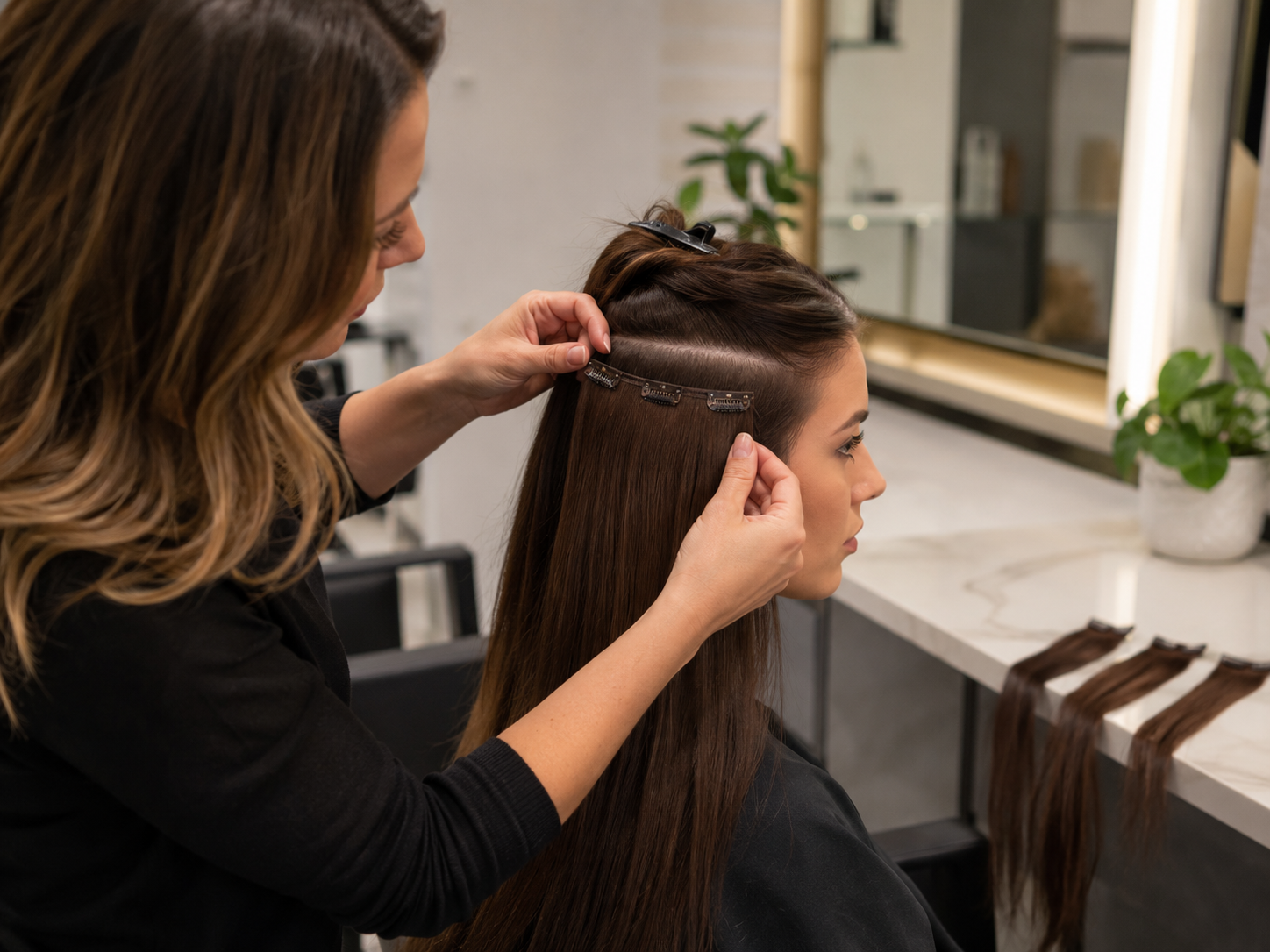
The back of the head is forgiving. It is wide, flat, and mostly hidden from the person wearing it. The sides are where clip-in sets get exposed, because that is where a weft too wide for the section starts to peek, poke, or slide forward over the course of a day. Most complaints about clip-ins being obvious trace back to that one stretch of scalp.
Sizing Starts With the Head
Sets are sold by weight, but the number that actually matters is the width of the wefts relative to the head they are going on. A narrow head wearing a set built for a wide one ends up with weft edges sitting close to the hairline, which no amount of teasing hides. A wider head wearing a small set gets gaps at the temples instead.
A few checks before buying:
- Measure across the back of the head at ear level and compare it to the widest weft in the set
- Count the clips per weft, since more clips spread tension and reduce sliding
- Look at how many small two clip wefts are included, because those are the pieces that do the side work
Density at the Ends Decides the Blend
Clip-ins live or die on the bottom four inches. Natural hair usually tapers at the ends, but it tapers gradually, and extensions that thin abruptly create a visible line where the two stop matching. Sets that hold the same thickness from root to tip blend better precisely because they do not taper on a different schedule than the hair around them. Shoppers comparing Wholesale Clip-In Hair Extensions tend to notice the difference in the product photography, where a full ended set falls in one solid line and a tapered one narrows into a point.
Silicone plays a role here too. Heavy coating gives a shine that natural hair does not have, so the extensions read as separate under direct light no matter how well they are cut in.
Styling Off the Head Is the Real Advantage
Clip-ins allow something no permanent method does. The hair can be styled while it is off the head, laid flat on a heat safe surface, which means even tension and no awkward angles at the back. Titanium or tourmaline plates matter for that work because they hold a steady temperature across the full weft instead of spiking on one section. Adjustable digital heat helps as well, since most human hair sets curl well below the maximum setting on a modern iron. Automatic shut off is worth having for the same reason it always is, which is that hot tools get set down and forgotten.
Storage Habits Nobody Mentions
Sets last longer when they are hung rather than folded into a drawer. Clips left clamped shut lose spring, tangles set in around the seams, and the hair develops bends that need heat to remove, which shortens its life further. A hanger and a fabric bag solve most of it.